
Replace Cloud AI Subscription Costs With One Machine at Home
Per-seat AI subscriptions are convenient until the count adds up. If a team of five each holds a twenty- to thirty-dollar seat, the annual bill reaches four figures before anyone asks what those seats
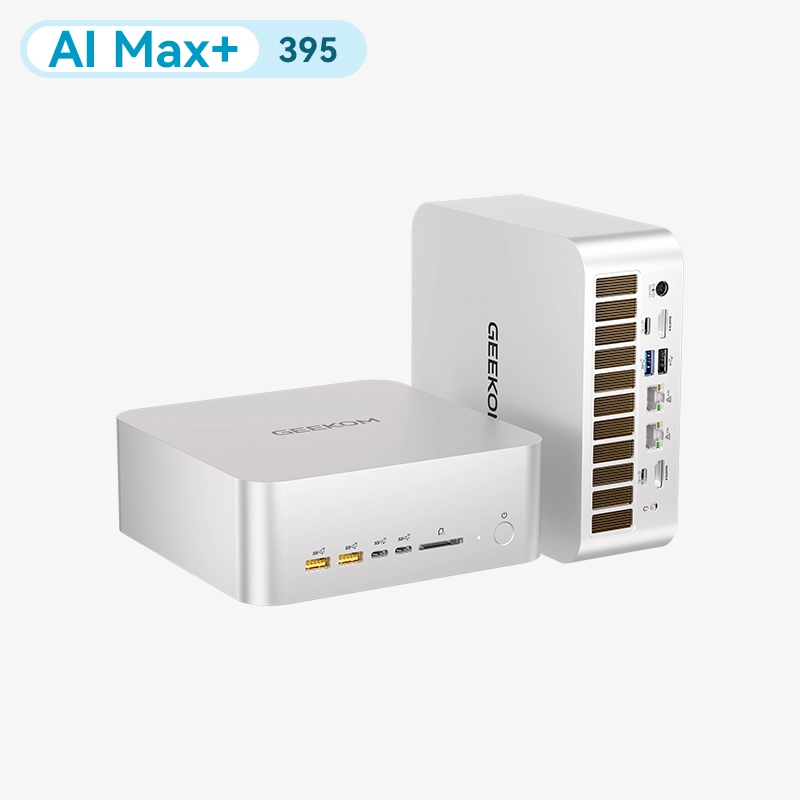
Per-seat AI subscriptions are convenient until the count adds up. If a team of five each holds a twenty- to thirty-dollar seat, the annual bill reaches four figures before anyone asks what those seats are actually used for. The alternative is to replace cloud ai subscription spending with a single machine that runs the models locally and serves the whole team. The economics favor local when usage is steady and the work is routine: drafting, summarizing, extracting fields from documents, answering questions about internal files. A mini PC with a wide unified memory pool, such as the GEEKOM A9 Mega with its Ryzen AI Max+ 395 and 128GB of LPDDR5X, can hold a capable model and handle several concurrent requests. The machine is bought once; the seats are rented every month. The trade is capability, not just money. A frontier cloud model still wins on the hardest reasoning and on the newest knowledge, so the honest plan is to keep one cloud seat for the work that needs it and move the routine load local. That is where teams actually save on AI costs. The practical threshold: when monthly seats cost more than a machine's amortized price and the work is mostly routine, it is worth running the numbers. The A9 Mega page in this category covers the configuration that makes it possible to replace cloud ai subscription costs at team scale rather than for one person.
GEEKOM A9 Mega
This GEEKOM machine sits at the top of the A-series by memory capacity, for people whose local models have outgrown 32GB or 64GB tiers. It uses the Ryzen AI Max+ 395 or 388 platform with up to sixteen Zen 5 cores and thirty-two threads, the Radeon 8060S with 40 RDNA 3.5 compute units, a 50-TOPS neural processor, and 126 combined platform TOPS. The defining feature is unified LPDDR5X-8000 memory up to 128GB shared between CPU and graphics, where bandwidth near 8000MHz supports tokens per second while weights and context share one pool the GPU can address directly. That lets quantized 30B to 70B models load locally, image generation can run alongside a chat session, and small teams can use it as a private inference or retrieval box for document search, batch OCR, transcription, and vision checks. The CNC-cut aluminum chassis measures 171 by 171 by 70.9mm at 1.9kg and uses a vapor chamber with dual fans sized for sustained inference and 4K editing rather than brief peaks. Four displays run through dual 40-gigabit USB4 ports with DisplayPort 2.1 and dual HDMI 2.1 FRL at 8K and 60Hz, and two M.2 2280 NVMe slots run in RAID 0 or 1 for up to 8TB of model and dataset storage. Dual 2.5-gigabit Ethernet, Wi-Fi 7, and an SD reader cover wired links and camera work. For households sharing the machine, plan one model resident at a time rather than several large ones together, since context and weights share the same fixed pool on every run. The memory is fixed rather than upgradable and pricing starts higher than the HX 470 tier, so choose this only when 70B-class capacity is a real requirement.
- Chip tier
- Strix Halo (Max+ 395)
- Memory
- LPDDR5X 8000 unified, up to 128GB (shared CPU+GPU)
- TOPS
- 126
- Storage
- 2x M.2 2280 NVMe PCIe 4.0 x4 (RAID 0/1, up to 8TB)