amd
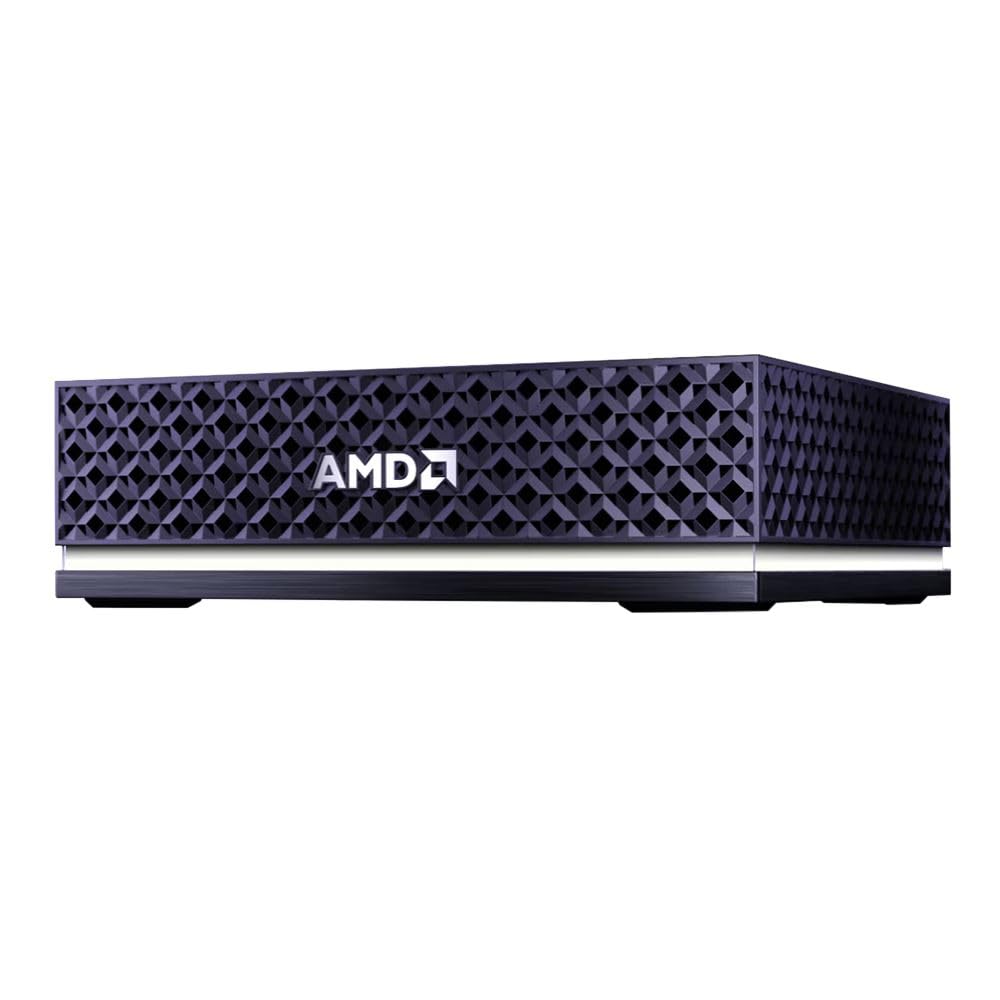
AMD Ryzen AI Halo (Ryzen AI Max+ 395, 128GB LPDDR5X / 2TB, Linux)
If you want to run large local models at home without building a tower with multiple graphics cards, this AMD machine is designed
128GB50 TOPSStrix Halo (Max+ 395)

Form factor as the workstation argument
A workstation, as the term is used in the office, has never been defined by its compute. It has been defined by its form: the machine that sits at the desk, that is quiet enough to be ignored, that is small enough to be part of the room, and that does not need a maintenance contract or a dedicated room. For years the machine that met that definition was a tower, and the tower was an accident of when it had to be built. The AI workstation, a machine that runs a model and an agent and your actual work on the same box, is the first time the definition has to be met at a real level of compute, and the answer, which is not the tower, is the box you would not notice if you sat next to it all day.
The argument for the mini-PC as the AI workstation is not that it is the most powerful thing you can buy, and it is not, the argument is that it is the most correct thing to have running a model all day in a space that is shared with a person. The model that is running has to live somewhere, and the somewhere has three properties that a tower does not have and that a mini-PC has by design. The first is the footprint. The AI machine is a thing you run, not a thing you sit on the other side of, and the desk it lives on is a human desk, with a monitor, a keyboard, and a chair, and the box that holds the model should be the size of a book, not the size of a cabinet. The second is the noise. A model that is loaded and ready is not a thing you are using at the moment you hear it, and a cooling system that has to be loud enough to cool a full tower, at the price it costs to hear it, will not survive a shared room. A mini-PC under the desk, in the tens of watts at idle, is a machine that does not have to be noticed, which is the entire requirement of a workstation in a room that is also a place you work.
The third property is the power, which is the one that makes the whole thing a different class of machine from a server. A tower that draws a few hundred watts at the wall, continuously, is a heating device that you are paying to run, in a room that has to be cooled for the person. A mini-PC under the desk, drawing tens of watts at idle and well under a hundred under a heavy inference load, is a machine that the room, and the electric bill, will not register. That is not a small number. Over a month of continuous running, the difference between the two is a tangible and recurring one, and it all goes into the same per-token cost that the rest of this market is built around, except here it is also a thermal and a noise and a space cost that the tower simply cannot escape. The mini-PC does not solve the AI problem by being stronger, it solves the workstation problem by being the right size and the right quiet and the right draw, at the level of compute the model actually needs.
So which machines are actually workstation-class in this sense, and which are not, and how do you tell the difference by looking? The test is not the chip, it is the combination. A workstation-class box is one where the chip is in the RDNA 3 class, the core that runs the 27B model at a useful speed, and the memory is enough to hold the model and the agent and the work you do on the machine, and the chassis is one that is built to run continuously, with a cooling solution that does not need to be loud to do it. That combination is exactly what the four brands have been shipping, and it is the reason the AI workstation and the mini-PC have become the same object in this market. The machine that is too small, the entry box with sixteen gigabytes and a mid core, is not workstation-class, because it cannot hold the model, the agent, and your work together, and the machine that is the workstation is the one that has the headroom to hold all three without a compromise.
The desk setup is the consequence of all of this, and it is the part of the workstation question that people actually live with. In the tower era, the AI machine was a separate thing, in a closet, under the desk, in another room, and the workstation, the thing at the desk, was just a terminal. In the mini-PC era, the AI machine and the workstation are the same object, and the desk gets one box that does the model, the agent, and the work, and the whole thing is small and quiet and out of the way. That is the workstation, in the sense the word has always meant, at the level of compute the model has always needed, and it is the reason the form factor is not a cosmetic choice in this market. The form factor is the workstation argument, and the box you would not notice if you sat next to it is the one that is right.
This is also, and this is the honest close, why the AI workstation is a category that has no real tower answer at the price it is bought at. The tower exists, and it is the right machine for the workloads that are not in this market, the training, the multi-user, the very large. For the workstation, the machine at the desk that runs a 27B model and an agent and your work and is the right size and quiet and draw for a room that is also a place people work, the answer is the box. It is not that the tower cannot do it, it can, it is that it does it at a price in space and power and noise that the room, and the bill, and the person in the chair, will pay for every day. The workstation question has never been how fast the machine is. It has always been how unbothered the room stays when the machine is doing the most important thing the machine does. That is the whole argument, and it is why the AI workstation is a mini-PC, and has been a mini-PC, since the day the core got good enough to run the model.
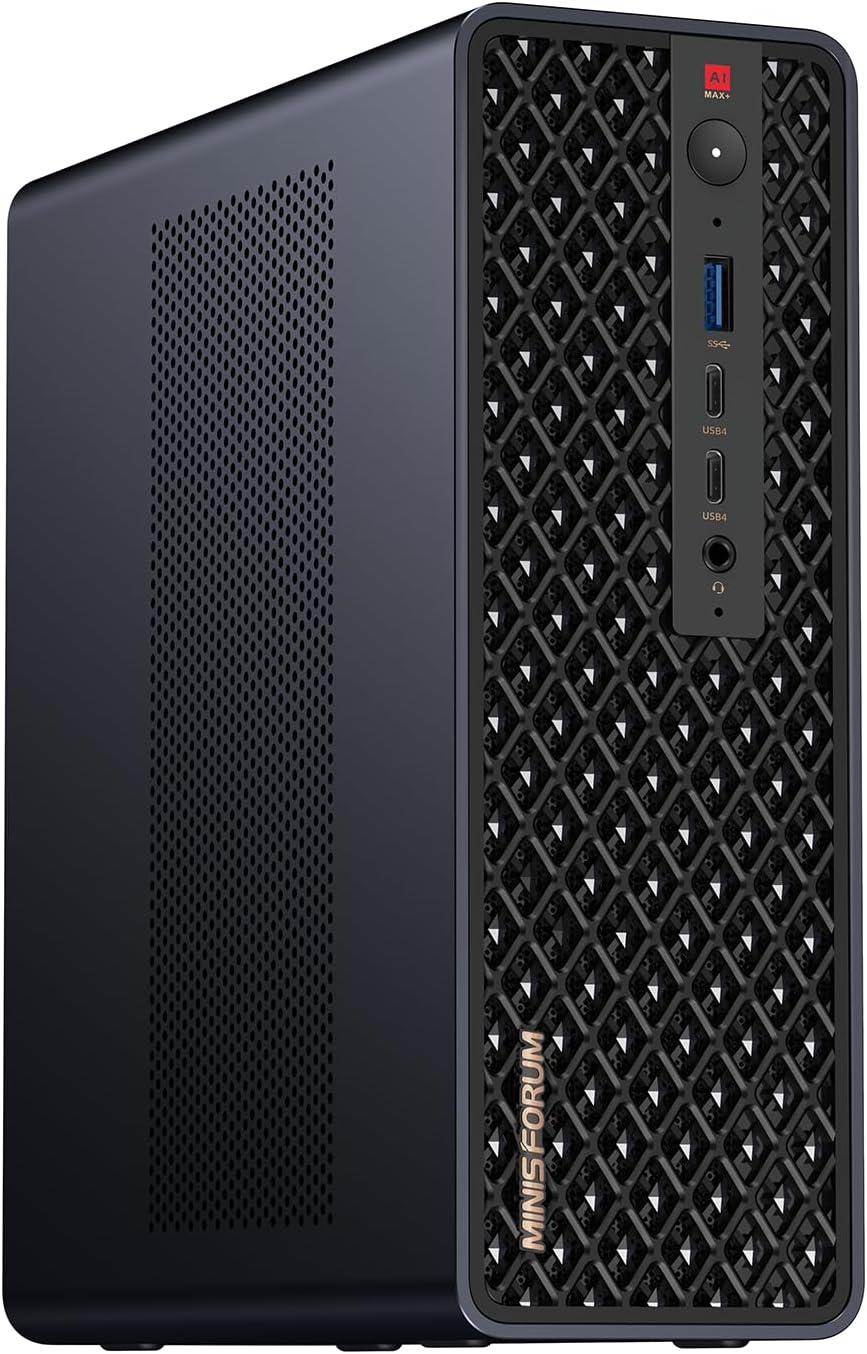
This MINISFORUM workstation is built for buyers who have outgrown the mini-PC tier, in a larger rackable chassis with a built-in 320W supply and slide-out tool-less access near 3.8 liters. The Ryzen AI Max+ 395 provides sixteen Zen 5 cores and thirty-two threads to 5.1GHz with 64MB of L3 cache, the Radeon 8060S handles inference, and a 50-TOPS neural processor brings combined output to 126 TOPS. The 128GB of LPDDR5X-8000 unified memory is shared between CPU and graphics with up to 96GB assignable so 30B to 70B models run at working context, image generation runs on device, and larger models can be served across clustered units for multi-model or retrieval workloads. That removes the VRAM wall that caps many discrete-card boxes at far smaller figures, which matters for private inference, batch OCR, transcription, and vision pipelines without a cloud round trip. Storage is dual M.2 2280 PCIe 4.0 x4 to 16TB in RAID 0 or 1 with 2TB pre-installed, and dual 10-gigabit Ethernet supports NAS, firewall, and link-aggregation roles beyond the 2.5-gigabit standard in smaller boxes. USB4 V2 at 80 gigabits per second plus two 40-gigabit USB4 ports, HDMI 2.1 to 8K and 60Hz, a full-length PCIe x16 slot, Wi-Fi 7, Bluetooth 5.4, and dual noise-cancelling microphones round out workstation input and output. Four switchable modes across performance, balanced, silent, and rack settings plus a reserved cluster power-on interface make it a 2U rack deployment option. The 130W sustained draw means higher power and heat than the mini-PC tier and the memory is fixed at purchase, so allow airflow and confirm the live listing before ordering. For shared rooms, keep the machine in a rack or cabinet where the 320W supply has clear ventilation during long runs.
If you want to run large local models at home without building a tower with multiple graphics cards, this AMD machine is designed
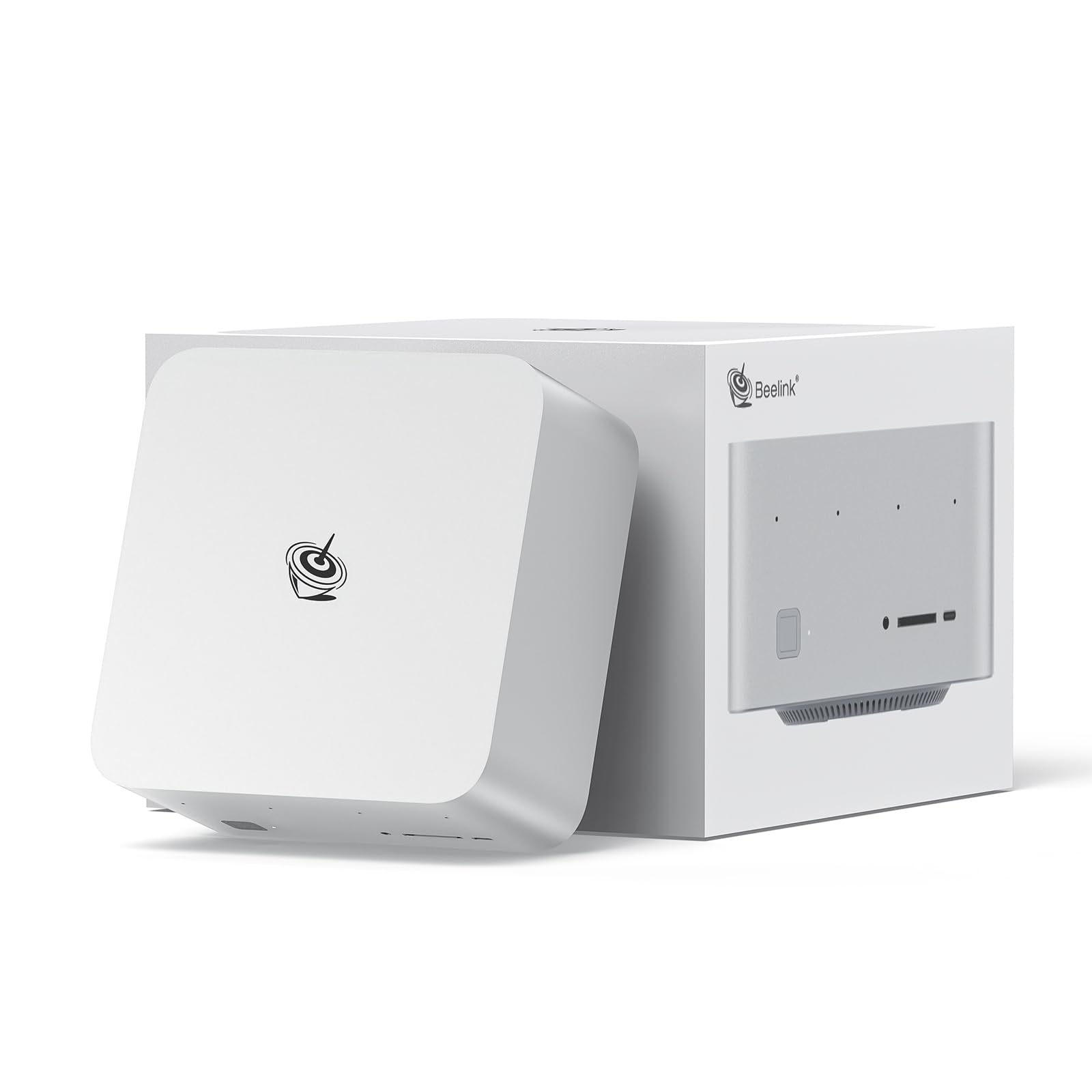
This Beelink desktop targets home labs and small teams that want 70B-class local inference in a compact chassis without assembling
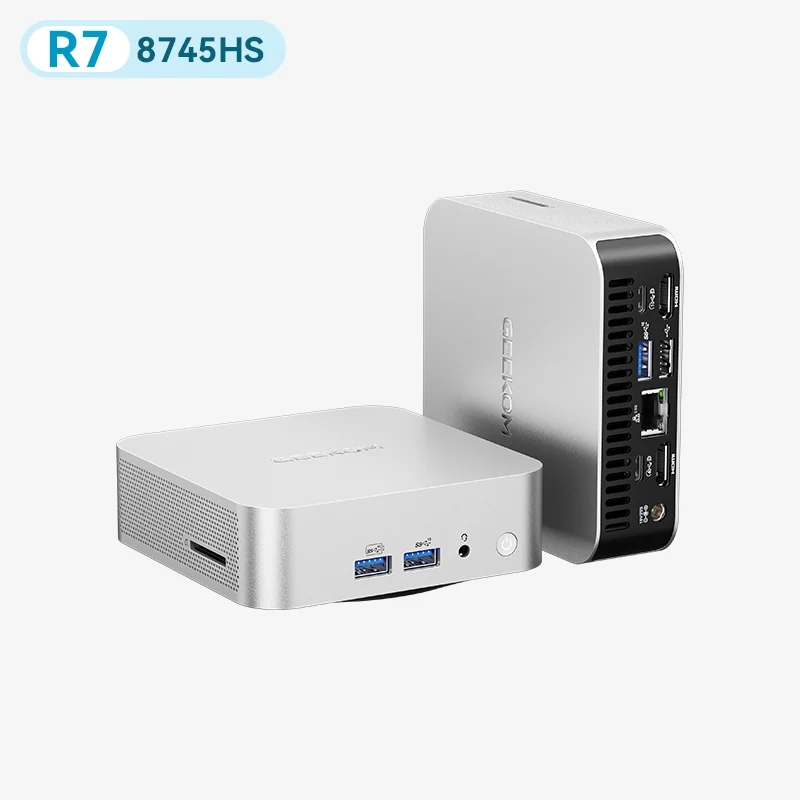
This GEEKOM mini PC is positioned as a general workstation for people whose day involves code builds, design files, 4K exports, an