beelink
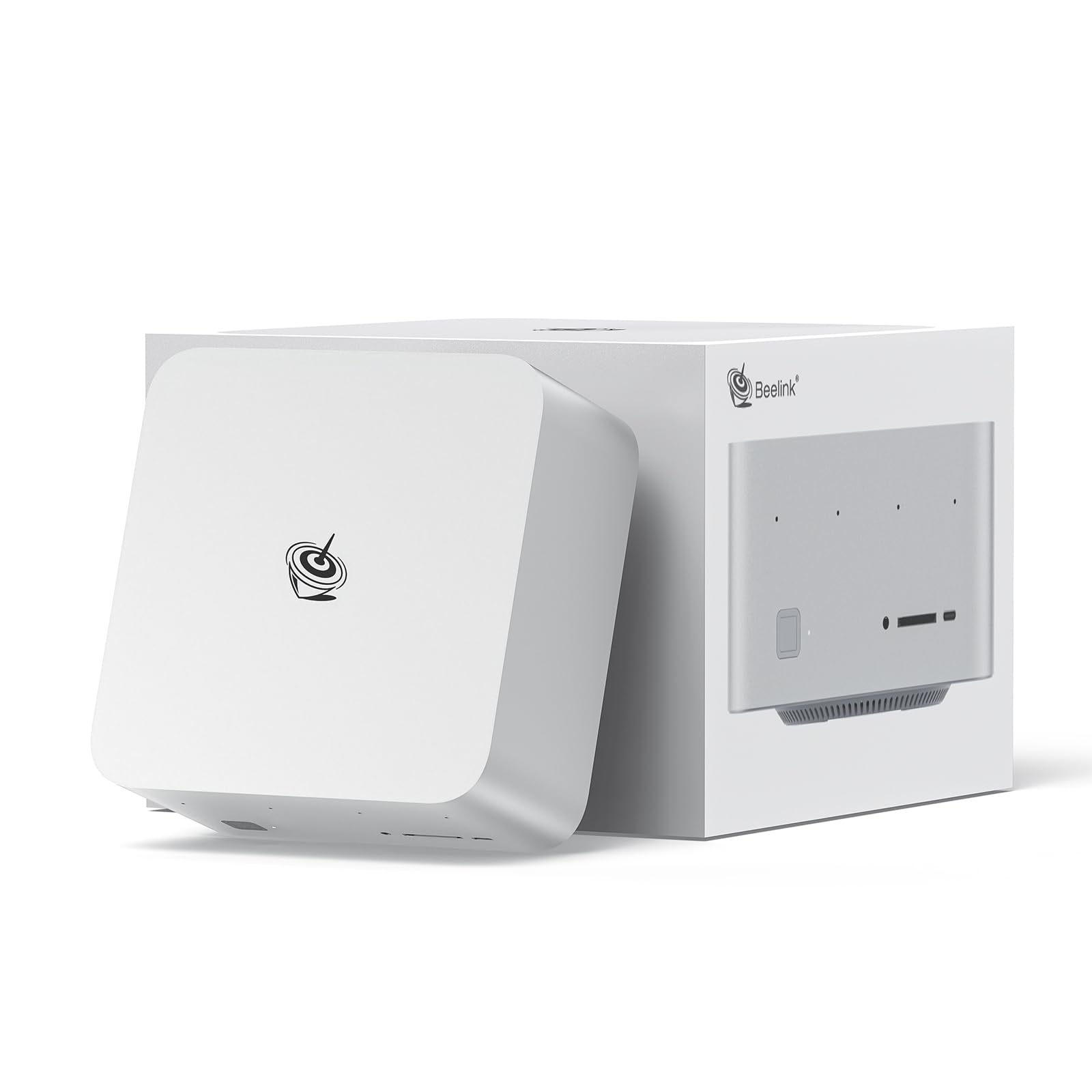
Beelink GTR9 Pro 395 (Ryzen AI Max+ 395, 128GB LPDDR5X / 2TB)
This Beelink desktop targets home labs and small teams that want 70B-class local inference in a compact chassis without assembling
128GB50 TOPSStrix Halo (Max+ 395)

The value, the long game, the confidence, the quiet, and the first
A buyer's list of the best machines is only as good as the reason behind each entry, and a list that never says why a machine is a pick is one anyone can argue with and no one can act on. This article takes the opposite approach. It names five AMD machines for local AI, spread across the four brands that build in this space and across the price ladder, and each entry states the reason it is a pick, the budget it sits in, and the person it is for. The result is a list a reader can use, because the buyer is not shopping for an abstract best thing, but for the one that is the best thing for their particular life.
The first pick is the value machine: the mid-core APU in the nine-hundred-to-thirteen-hundred range, with enough memory for the model to fit comfortably. It exists at all four brands, which is the point of a pick, and the reason it goes first is that it is the machine where the largest number of buyers should start looking. It hosts a twenty-seven-billion model as a first-class citizen, with room for context and for the harness, at a price that is still the price of a work laptop. It is not the fastest box in the room, but it is the most correct box for the person whose target is a twenty-seven-billion interactive model on a desk. The most correct thing, at the most common budget, earns the first slot on any honest list.
The second pick is the long-game machine: the flagship core with sixty-four gigabytes of memory, at the top of the two-thousand range. This one is for the person who is not going to upgrade, because the headroom is the point. It is the pick for whoever runs the model continuously, or for the person who simply does not want to think about memory for three years. It ages best, because the extra memory and the faster core purchase the years, and it is the default for the professional and the small business, the people whose work depends on the model and who do not want to be last in the building to find out that it is too small. The person who buys once is the person this pick is built for.
The third pick is the confidence machine. It is the same architecture at the two-thousand price, but the reason for it is not capability, it is confidentiality. This one is for the small business that runs its own documents and data through a model and does not want that data leaving the building. The business is buying confidence, and the confidence lives in the size, and the size lives in the memory, and the memory is what keeps the model, the context, and the data together on the machine with no round trip through a cloud. It is often the same silicon as the second pick, but the reason is different, and a different reason earns a different line on the list. The confidence machine is the pick for the person whose decision is not about speed. Speed is a bonus. The decision is about the room the data never leaves.
The fourth pick is the quiet one. It is for the person who wants the model to live in the room, in a shared space, without the room even registering that it is there. This is the pick that makes the form factor a reason to buy rather than a convenience. It is the mini, the one small enough to sit on a shelf, the one whose size, silence, and power draw go unremarked by the room, the person in the chair, and the electric bill all at once. It is for the person buying the ability to run a model in a place that is also a place to live and work. It is the pick for the person whose machine is a residence, not a project, and it is the core reason the market has settled on a box rather than a tower.
The fifth pick is the first: the sub-thousand entry. It is for the person who is just stepping in the door. This is the pick that is not the best, and that is exactly what makes it the first, because the rest of the list is built for the person the entry pick has already found. A newcomer to the technology is a newcomer, and the entry machine is what gives them the first real experience. That first experience is what decides whether they come back, and the person who comes back is a buyer. The entry pick is the one that finds the buyer, and the other four are the list the buyer then comes to read.
Set the five side by side and the list is a single family at a gradient of memory, core, and price, and the five picks are the five different reasons a person ends up buying. The value, the headroom, the confidence, the quiet, and the first. The person who is one of the five finds the pick, and the pick is the machine, and the machine is the APU. That is the best-AI-hardware list, and it works when the buyer stops arguing about which single box is the best, because the best is not a box at all. The best is the reason, the reason chooses the pick, the pick chooses the machine, and the machine is the one the reason already settled on.
If you want to run large local models at home without building a tower with multiple graphics cards, this AMD machine is designed around that single goal. At its center is the Ryzen AI Max+ 395, a 16-core, 32-thread Zen 5 processor that boosts to 5.1GHz with 64MB of L3 cache, paired with the Radeon 8060S graphics engine carrying 40 RDNA 3.5 compute units and a 50-TOPS XDNA 2 neural processor for roughly 126 combined TOPS across CPU, GPU, and NPU. The headline is memory, with 128GB of LPDDR5X-8000 unified memory running at 256GB per second, where a large portion can be set aside as graphics memory so weights, context, and working data share one fast pool. That arrangement holds 70B-class models in place and reaches toward larger models in the 200B-parameter range in device memory, while the NPU handles background features that would otherwise compete with generation. Storage is a 2TB self-encrypting NVMe drive for the system plus a model library, and the footprint is compact at 150 by 150 by 45.4mm and under 1.2kg. Connections cover one 10-gigabit Ethernet port, Wi-Fi 7, Bluetooth 5.4, three USB-C ports plus a dedicated USB-C power input on a single 120W cable, and HDMI 2.1b for a display. It ships on AMD's Linux AI developer setup with ROCm in place, alongside tools such as Ollama, llama.cpp, and vLLM, which suits batch transcription, OCR runs, document retrieval with RAG, vision pipelines, and multi-user local serving for a small team or home lab. It sits at the top of the compact local-AI ladder in this catalog, above the Beelink GTR9 Pro tier, with a one-year limited warranty and third-party marketplace supply, so confirm the live listing before ordering.
This Beelink desktop targets home labs and small teams that want 70B-class local inference in a compact chassis without assembling
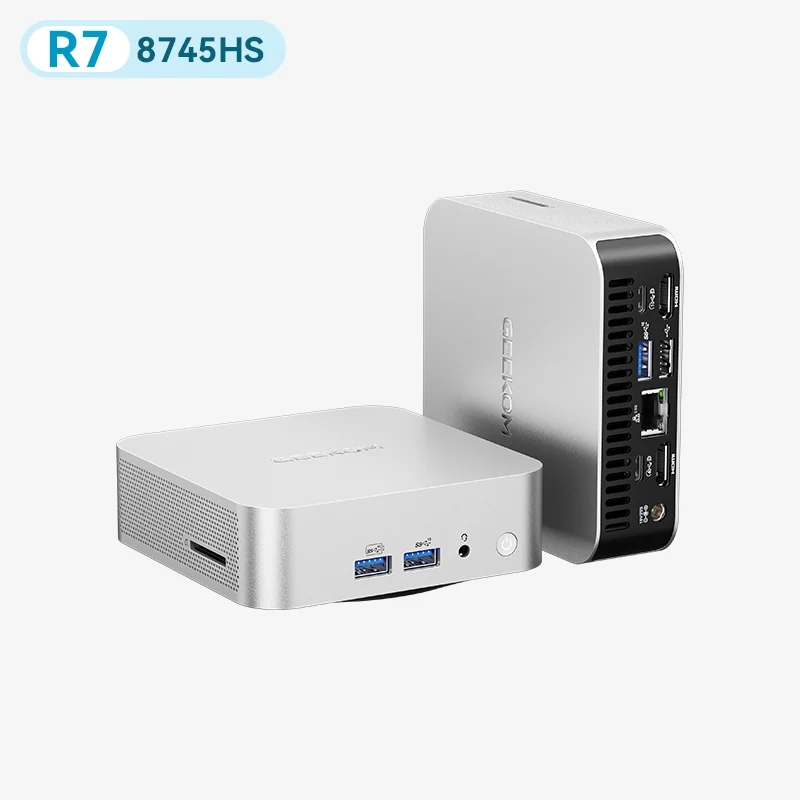
This GEEKOM mini PC is positioned as a general workstation for people whose day involves code builds, design files, 4K exports, an
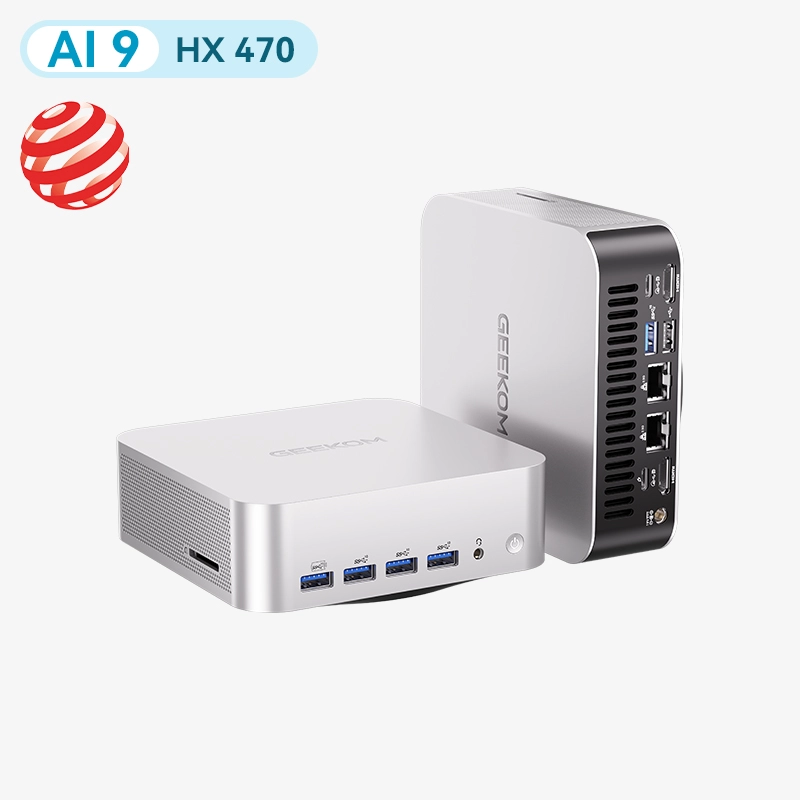
This GEEKOM desktop is the most capable machine in the A-series for people whose main work is local AI, agents, and always-on serv