
A Budget Local AI Setup That Still Runs Real Models
A budget local ai setup does not have to mean a toy model that forgets the question halfway through. The trick is matching the model size to the memory you can afford, then choosing the tasks that siz
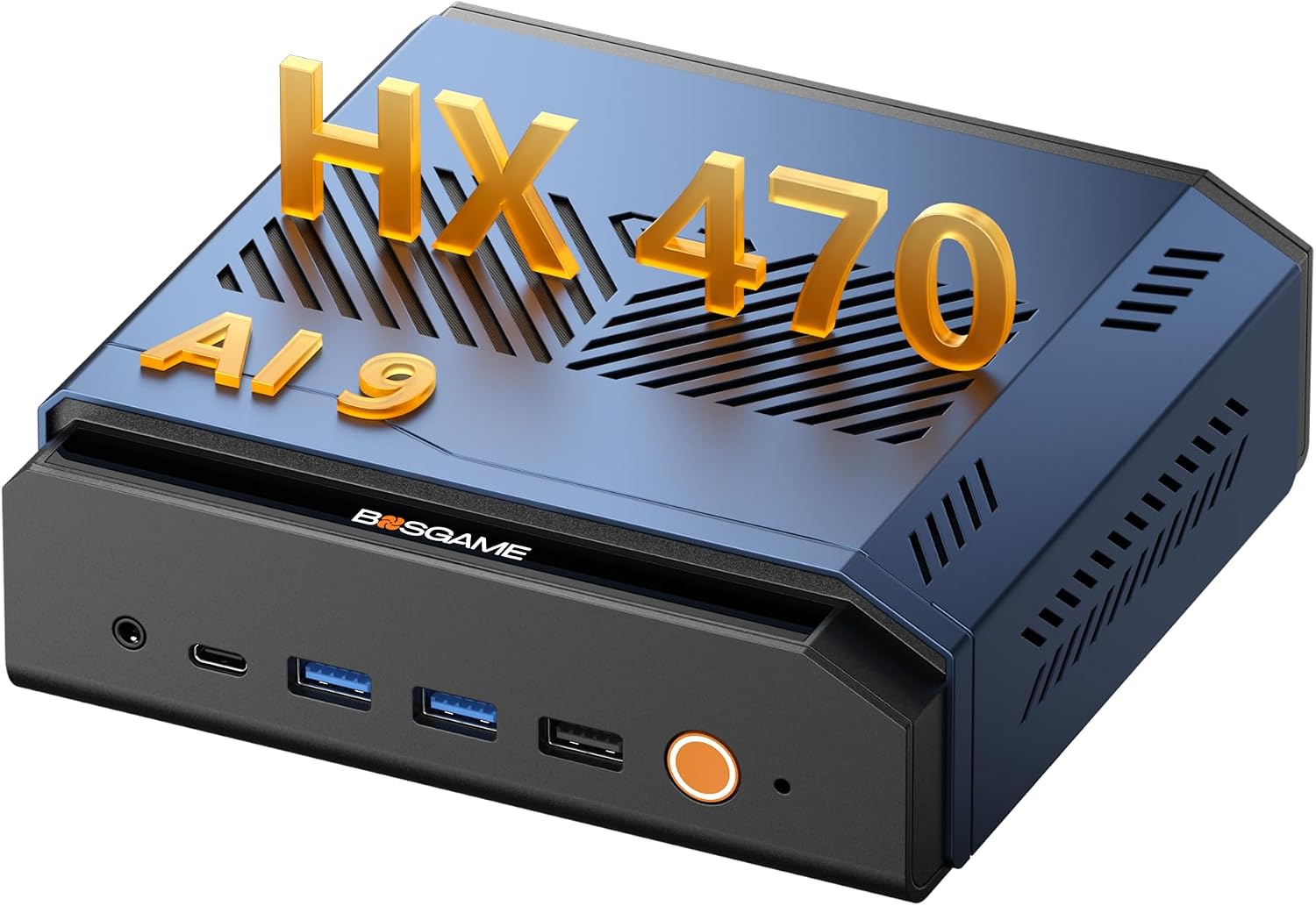
A budget local ai setup does not have to mean a toy model that forgets the question halfway through. The trick is matching the model size to the memory you can afford, then choosing the tasks that size handles well, rather than buying the smallest box and expecting frontier results. The floor for useful work is a modern 12-core chip with 32GB of memory, which holds an 8B to 14B model at 4-bit comfortably and a 27B model only with careful context limits. The BOSGAME AI 9, with its Ryzen AI 9 HX 470, Radeon 890M, and 32GB of DDR5 in the base configuration, sits at that floor and leaves an upgrade path through its SO-DIMM slots. That is the honest definition of an affordable local LLM machine: one that runs the models you will actually use today and can grow. What this class does well: drafting, summarizing, document Q&A, code completion, and triage of support messages. What it does not: long-context analysis of a hundred-page file, or the hardest reasoning problems, both of which want more memory and a bigger model. The rule for a budget local ai setup is to buy for the model you need next year, not the demo you ran today, and to size memory first because it cannot be added later on soldered designs. The AI 9 page in this category covers the configurations and where the upgrade path ends.
BOSGAME AI 9 (Ryzen AI 9 HX 470, 32GB DDR5 / 1TB)
This BOSGAME machine aims to bring the full HX 470 platform to a budget-conscious buyer who plans to expand it over time. The Ryzen AI 9 HX 470 provides twelve cores and twenty-four threads on a 4nm process boosting to 5.2GHz, the Radeon 890M adds 16 RDNA 3.5 compute units at 3.1GHz, and a 55-TOPS XDNA 2 neural processor lifts platform output to 86 TOPS in a Copilot+ certified build. Memory is 32GB of DDR5-5600 on two socketed SO-DIMM slots, so quantized 14B models run from the start and 27B models fit comfortably as configurations grow, with 128GB as the dependable ceiling to plan around given the per-slot limit. Storage distinguishes this chassis, with three M.2 NVMe slots expanding to 8TB in total, a 1TB PCIe 4.0 x4 drive pre-installed, and room to keep the system, a model library, and a dataset on separate drives. An OCuLink port provides a PCIe 4.0 x4 link at up to 64 gigabits per second for an external graphics dock, while full-function USB4, dual 2.5-gigabit Ethernet for server or firewall duties, Wi-Fi 7, Bluetooth 5.4, and quad-display output across HDMI 2.1 at 4K and 144Hz, DisplayPort 1.4 at 4K and 144Hz, and USB4 at 8K and 60Hz round out a workstation-style port set. Windows 11 comes pre-installed, and the warranty covers one year full-machine plus three years on parts with FCC, RoHS, and CE certification. Modest idle draw helps in a rack or cabinet, while the external supply keeps heat out of the small chassis during long inference runs and the triple-slot layout keeps growth simple, so confirm power connections before ordering. In the wider HX 470 field it is the value-minded option with unusually generous internal storage.
- Chip tier
- HX 470
- Memory
- 32GB DDR5 5600 (dual SO-DIMM, socketed; per-slot max 64GB — see honesty note on the 256GB
- TOPS
- 55
- Storage
- 1TB PCIe 4.0 x4 NVMe pre-installed; triple M.2 NVMe slots expandable to 8TB (each slot max