What you actually get at each price point
Search for the price of an AI server and you will get answers that range from a couple of hundred dollars to tens of thousands, all of them technically correct and all of them nearly useless. The spread exists because 'AI server' is not one product, it is a ladder of machines, each one unlocking a different class of model and a different class of workload. This article maps that ladder using the AMD mini-PC tier that most individual builders, studios, and small businesses actually buy, so you can see precisely what you get at each price, where the sweet spot is, and when reaching up one tier is genuinely worth it rather than just comfortable.
Rung one, the entry tier, runs from roughly five hundred to eight hundred dollars. This is an AMD APU mini-PC with a mid-range Ryzen processor and an integrated Radeon 780M-class graphic core, usually configured with sixteen to thirty-two gigabytes of memory. What it can do is genuinely useful and genuinely limited. It runs small open models, up to about seven to eight billion parameters, at comfortable speeds, and it can stretch into the twelve-billion class if you accept slower generation. It is the right rung if your goal is to learn how local inference works, to run a private assistant, or to keep a lightweight agent on the cheap. It is the wrong rung if you want a serious twenty-seven-billion model with a long context, because the memory ceiling will bite you immediately and you will spend your savings on an upgrade.
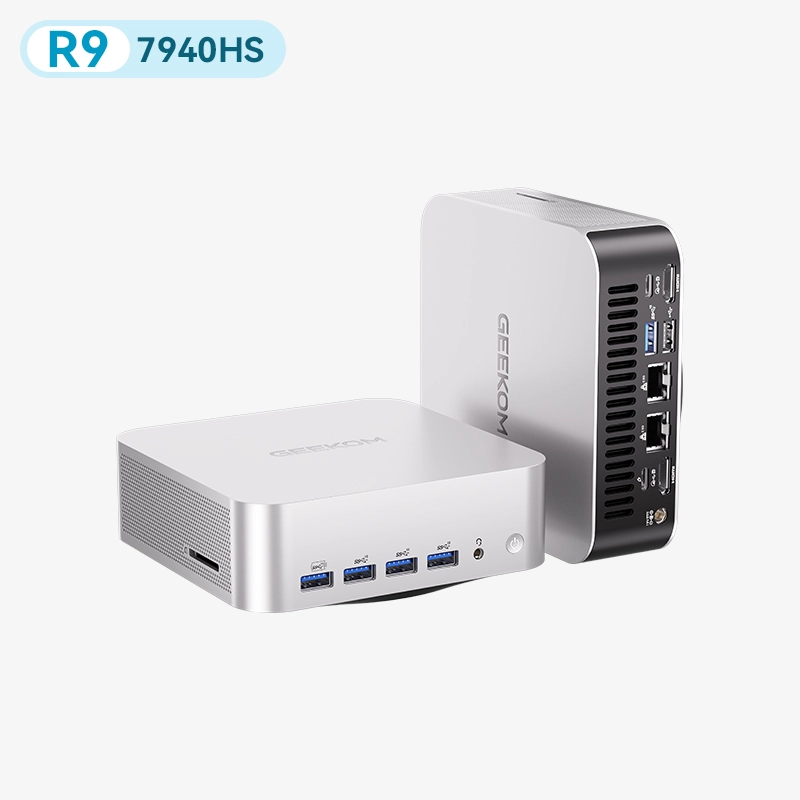
Rung two is the value sweet spot, and it runs from about nine hundred to thirteen hundred dollars. Here you keep the RDNA 3 integrated GPU but you raise the memory and the processor, landing in the 780M to 805M class with thirty-two to sixty-four gigabytes of unified memory. This is the tier that finally makes a twenty-seven-billion-parameter model a first-class citizen at a Q4 quantization point: the weights fit with room to spare, and throughput is usable for interactive work, agent loops, and long-form generation. Most of the affordable AMD AI hardware in this market, from Geekom to GMKTec to MINISFORU to Asus, has a specific SKU aimed squarely at this rung, and it is where most buyers should point their eye first. If you only buy one box for local AI, this is almost always the one.
Rung three, from about thirteen hundred to two thousand dollars, is where the flagship integrated chips appear and where configuration quality rises: a top APU such as the Radeon 890M class, the largest memory configurations, dual memory channels at higher speed, and faster storage. You buy this rung for two reasons. The first is maximum sustained throughput for the largest models the integrated architecture can host, which is a real, measurable speed gain in dense, long-context work. The second is headroom, because the extra memory and bandwidth buy you a longer future before the model you want outgrows the box. For a studio running inference continuously, or a developer who does not want to think about memory for several years, the extra spend is justified. For a person testing the waters, it is money better spent later.
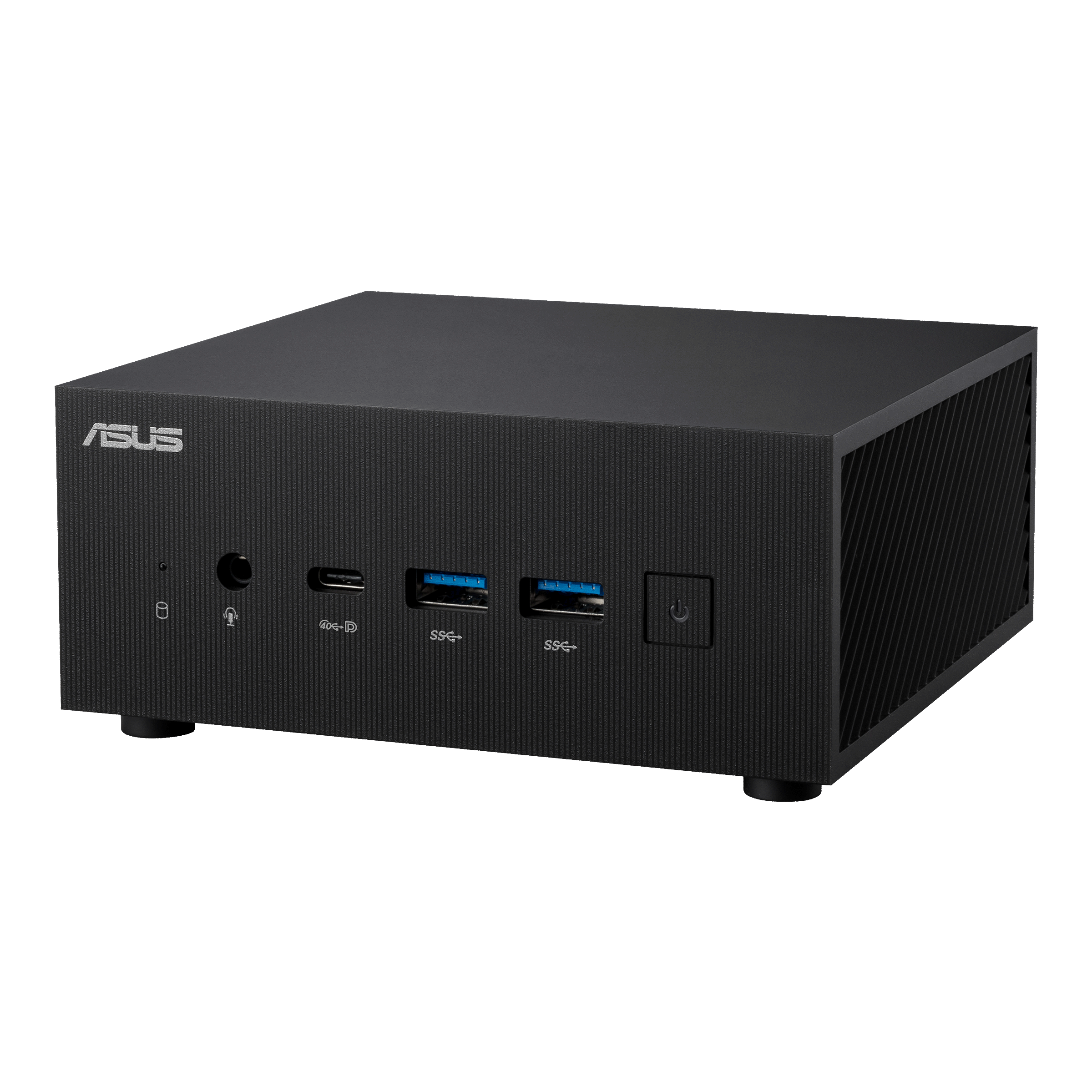
Rung four, from roughly two thousand dollars and up, is where the conversation changes from 'a good machine' to 'a workstation, or a machine plus a discrete card.' This is the Asus and pro-oriented desktop territory, higher power envelopes, professional platforms, or a mini-PC married to an external discrete Radeon GPU. You are here if you want to move beyond pure inference into meaningful fine-tuning, larger multi-tenant serving, or models that the integrated core cannot economically host. The price jumps because power, cooling, and the discrete accelerator all cost real money. Most people who are told they need this rung would in fact be better served at rung two or three for their actual workload, so treat this tier as an escalation, not a default.
A few cross-tier facts that do not change with the price. First, memory capacity is the number that sets your ceiling on which models will fit, and it is the number most people underestimate. A model with the same parameter count can be hosted in several quantizations, and the quantization you can afford is set by your memory, not your budget. Second, memory bandwidth sets your floor on speed, which is why a faster, dual-channel or wider memory configuration feels dramatically snappier even when the chip is identical. Third, the integrated GPU is shared with the system, so a box used for other heavy tasks while the model runs will get slower, an effect that matters more at the lower end than at the flagship end.
So where do you land? If you want the lowest credible entry that still respects the technology, start at the low end and be honest that you are learning. If you want a dependable, long-lived machine that can host a serious twenty-seven-class model as a daily driver, the middle value rung is the default for the largest number of buyers, and every serious vendor in this space has an answer there. If you run the model continuously or do not want to upgrade for years, reach for the top-integrated or workstation rung and pay for headroom. The trap to avoid is the opposite of underspending, which is overbuying: a machine two tiers above your real workload is not more intelligence, it is idle silicon that will not make your tokens faster than the tier that actually fits your model. Match the rung to the largest model you will actually run, not the largest one you might someday want, and the price will feel like a feature instead of a gamble.
Machines for this topic
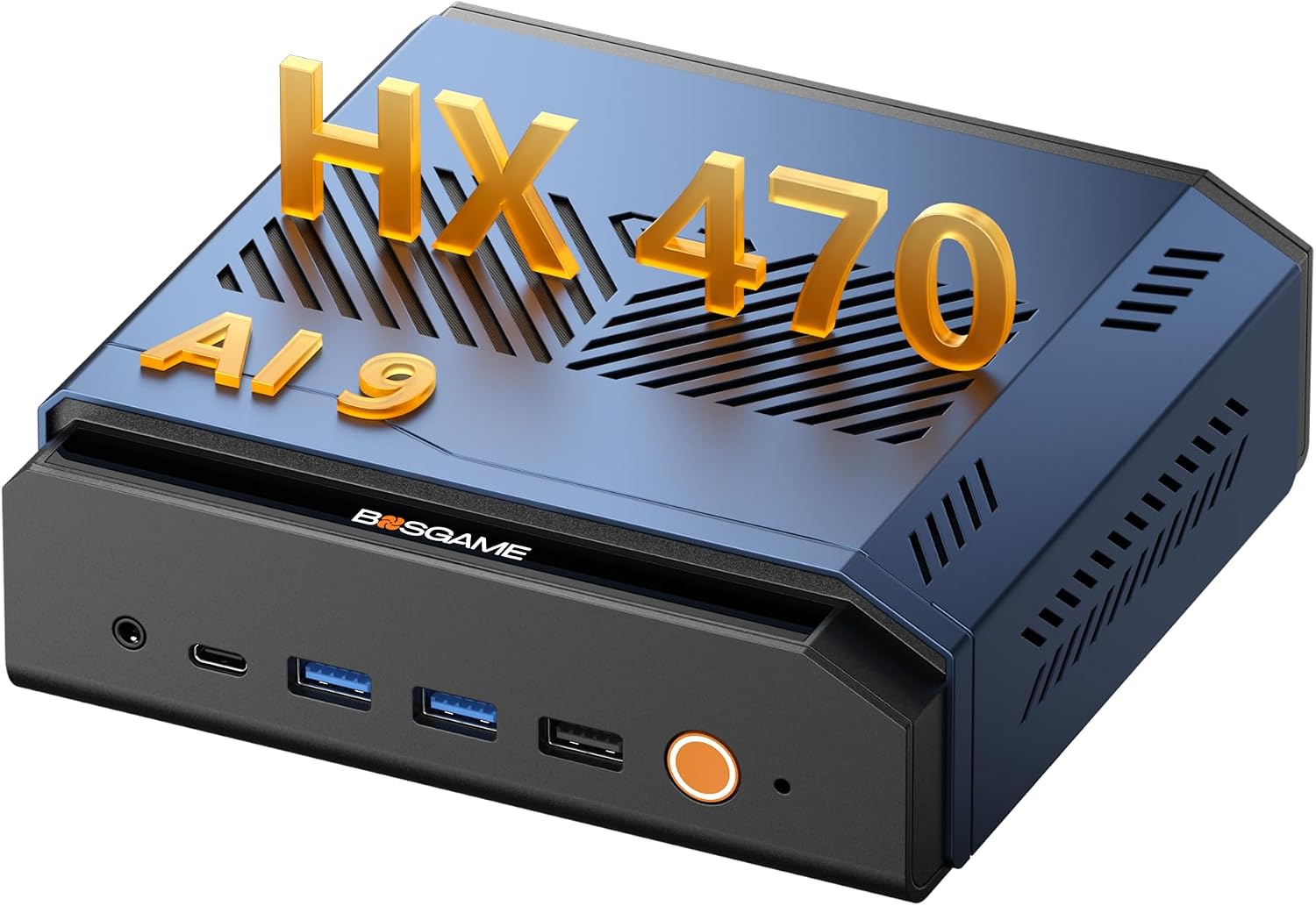
This BOSGAME machine aims to bring the full HX 470 platform to a budget-conscious buyer who plans to expand it over time. The Ryzen AI 9 HX 470 provides twelve cores and twenty-four threads on a 4nm process boosting to 5.2GHz, the Radeon 890M adds 16 RDNA 3.5 compute units at 3.1GHz, and a 55-TOPS XDNA 2 neural processor lifts platform output to 86 TOPS in a Copilot+ certified build. Memory is 32GB of DDR5-5600 on two socketed SO-DIMM slots, so quantized 14B models run from the start and 27B models fit comfortably as configurations grow, with 128GB as the dependable ceiling to plan around given the per-slot limit. Storage distinguishes this chassis, with three M.2 NVMe slots expanding to 8TB in total, a 1TB PCIe 4.0 x4 drive pre-installed, and room to keep the system, a model library, and a dataset on separate drives. An OCuLink port provides a PCIe 4.0 x4 link at up to 64 gigabits per second for an external graphics dock, while full-function USB4, dual 2.5-gigabit Ethernet for server or firewall duties, Wi-Fi 7, Bluetooth 5.4, and quad-display output across HDMI 2.1 at 4K and 144Hz, DisplayPort 1.4 at 4K and 144Hz, and USB4 at 8K and 60Hz round out a workstation-style port set. Windows 11 comes pre-installed, and the warranty covers one year full-machine plus three years on parts with FCC, RoHS, and CE certification. Modest idle draw helps in a rack or cabinet, while the external supply keeps heat out of the small chassis during long inference runs and the triple-slot layout keeps growth simple, so confirm power connections before ordering. In the wider HX 470 field it is the value-minded option with unusually generous internal storage.