amd
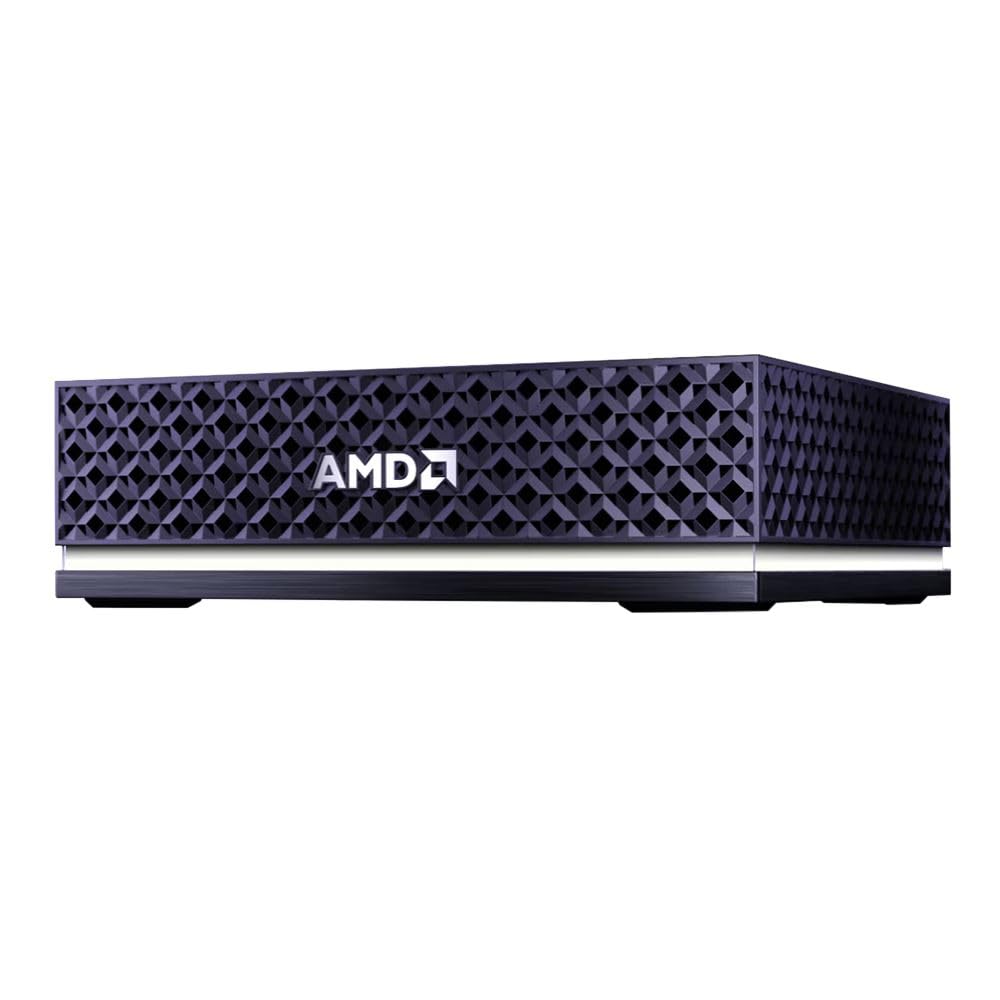
AMD Ryzen AI Halo (Ryzen AI Max+ 395, 128GB LPDDR5X / 2TB, Linux)
If you want to run large local models at home without building a tower with multiple graphics cards, this AMD machine is designed
128GB50 TOPSStrix Halo (Max+ 395)

Inference vs. training, and the LoRA slice in between
Training is the workload that quietly splits this market in two. The person running a model and the person training one are usually buying different machines, and the gap has nothing to do with taste. It is a matter of bottleneck, and the bottleneck of a training run is not the bottleneck of an inference run. The integrated APU that is the right, cheap answer for inference is a poor default for most training, and this article draws that line as honestly as it can. It also names the one slice of training a local, affordable AMD machine genuinely does well, and the slice that belongs on a server.
The split comes down to what the GPU is doing on every step. Inference is a memory-bandwidth job. The weights live in memory, the chip reads them again and again, and the cost is the reading, so the core only needs to be quick enough to spend the data as the memory delivers it. Training reverses that relationship. The chip is not merely reading the weights, it is writing updated ones back, and that write is arithmetic on every parameter in the batch, so arithmetic becomes the cost. The property that makes inference cheap, plenty of bandwidth with a modest core, is the exact property that makes full training the wrong workload on the same silicon. This one fact is why the training decision has to come before the inference decision. Training is what picks the machine, and no spec sheet tuned for inference can turn the box you bought for inference into one built to train on.
Here is the slice a local machine can actually do, and it is a real and very common one. Parameter-efficient tuning, above all low-rank adaptation or LoRA, applied to a model that already fits in memory, runs fine on a local box. A LoRA run keeps the base model frozen and trains a small set of adapter weights on top of it. The frozen model must still be read, which is the same bandwidth job as inference, while the part that changes is tiny, so the arithmetic is tiny. In practice the bottleneck of a LoRA run sits far closer to a normal inference run than to a full training run. That is why fine-tuning a sixteen-to-twenty-seven billion model at a quantization that fits, the class that lives in an APU build, is the one training task a local, affordable machine pulls off without embarrassment. It is also, by far, the most common thing people actually do, because it is the amount of tuning that produces a genuinely useful custom model without a datacenter to get there.
The memory math explains why that slice fits where the full training does not. A LoRA run must hold, at the same time, the frozen base model, the small adapter with its gradients, and the examples in the current batch. The base model is the large, fixed number and the adapters are small, so the total hovers near an inference run plus modest overhead. Batch size is the free variable, and it is exactly what the leftover memory allows. The machine you own sets the batch, and the batch sets the training speed. Full training, by contrast, must hold the base model at full precision, gradients for every parameter, and the optimizer state, and those last two are multiples of the model itself. Multiply the model size by the optimizer state and the batch, and the number stops fitting in a box on a desk. That single comparison, the LoRA total set against the full-training total, is the line the whole market is divided on.
So the full training of a model in this class is a server workload, and it behaves like a different machine in every way that matters. It wants the large memory to hold the full model and its optimizer state, the compute of cores designed for sustained arithmetic, the power and cooling that the arithmetic generates, and a rack or datacenter to live in rather than a shelf. That is why the person doing full training is not shopping in this market at these prices. The person in this market is the one doing the LoRA, and the one doing the LoRA is the one whose machine sits on the desk, because the LoRA is the workload the desk machine can actually run. The slice tells the whole story. LoRA stays local on the APU, full training goes to the server, and the decision is the workload, not the brand, not the marketing FLOPS, not anything on the wall. Know which side of the line you stand on, and the hardware question answers itself. The APU on the desk is the side of the line this market lives on, and most buyers, once they have named their workload, are already there.
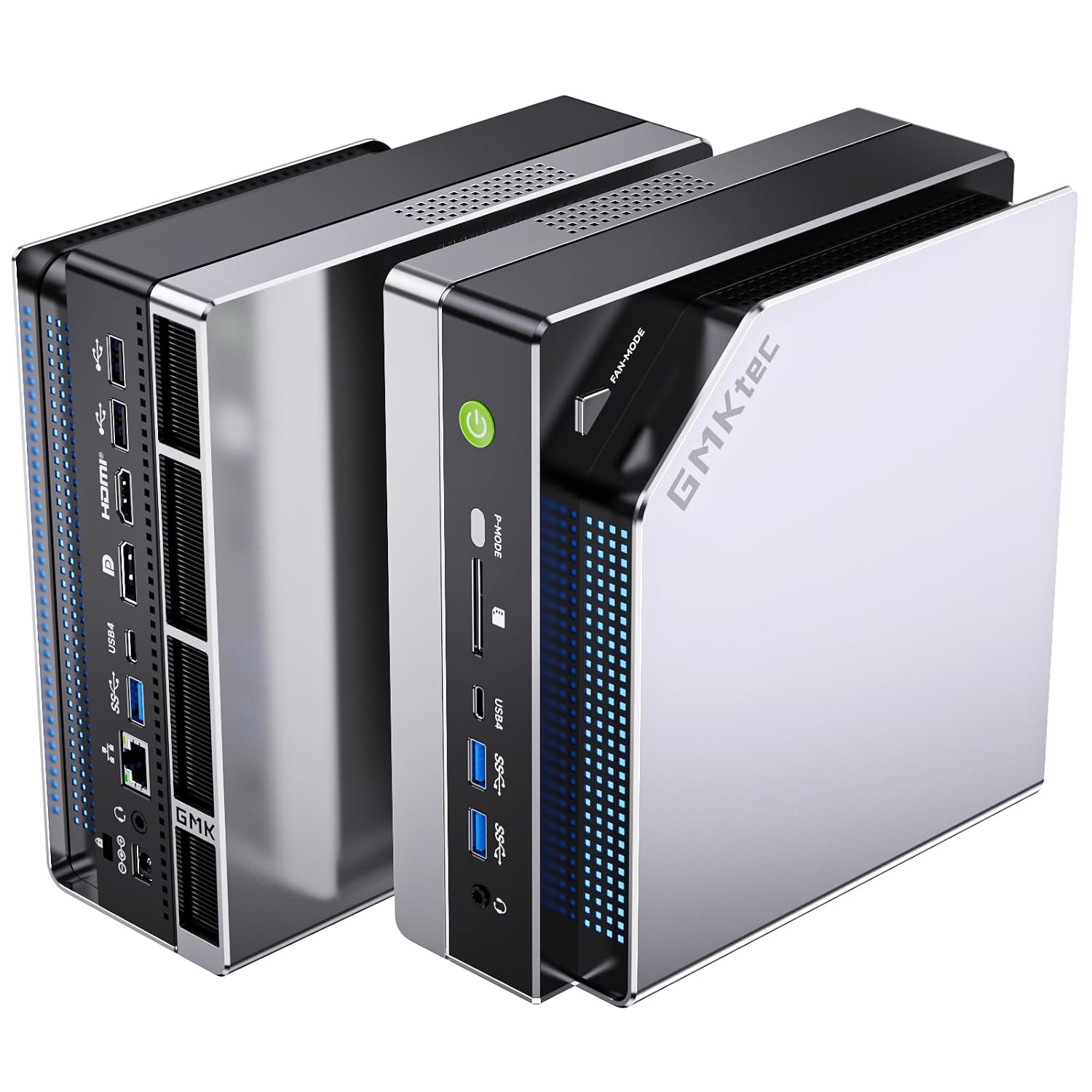
This GMKTec desktop is the compact end of the Strix Halo class, for people who want the largest models that will fit in a desk-sized machine. The Ryzen AI Max+ 395 provides sixteen Zen 5 cores and thirty-two threads to 5.1GHz with 64MB of L3 cache, the Radeon 8060S adds 40 RDNA 3.5 cores, and a 50-TOPS XDNA 2 neural processor brings combined output to 126 TOPS. Memory is the reason to buy it, with 128GB of LPDDR5X-8000 soldered on board and up to 96GB assignable as graphics memory through AMD software, so weights and context share one pool without the VRAM wall that caps most compact desktops. That supports 30B through 70B quantized models, on-device image generation alongside a chat session, document retrieval, batch OCR, transcription, and vision pipelines, and the vendor cites even larger models at reduced precision within the same pool. Storage starts at 2TB of PCIe 4.0 NVMe with a second M.2 slot taking expansion to 8TB for a full library. Ports include dual USB4 at 40 gigabits per second, three USB 3.2 Gen2 ports, two USB 2.0 ports, HDMI 2.1 to 8K and 60Hz, DisplayPort 1.4, Wi-Fi 7, Bluetooth 5.4, an SD 4.0 reader, and a single 2.5-gigabit Ethernet port supplied through an external power pack. A triple-heat-pipe stack with dual CPU fans plus a DDR and SSD fan keeps the sealed tool-less chassis steady under sustained load. Plan a single large model resident at a time so context and weights fit comfortably together in the shared pool. The memory is a fixed ceiling that cannot be expanded, some listings mislabel the graphics engine while the spec table identifies the Radeon 8060S, and the single wired port trades against workstation-class alternatives with more expansion.
If you want to run large local models at home without building a tower with multiple graphics cards, this AMD machine is designed
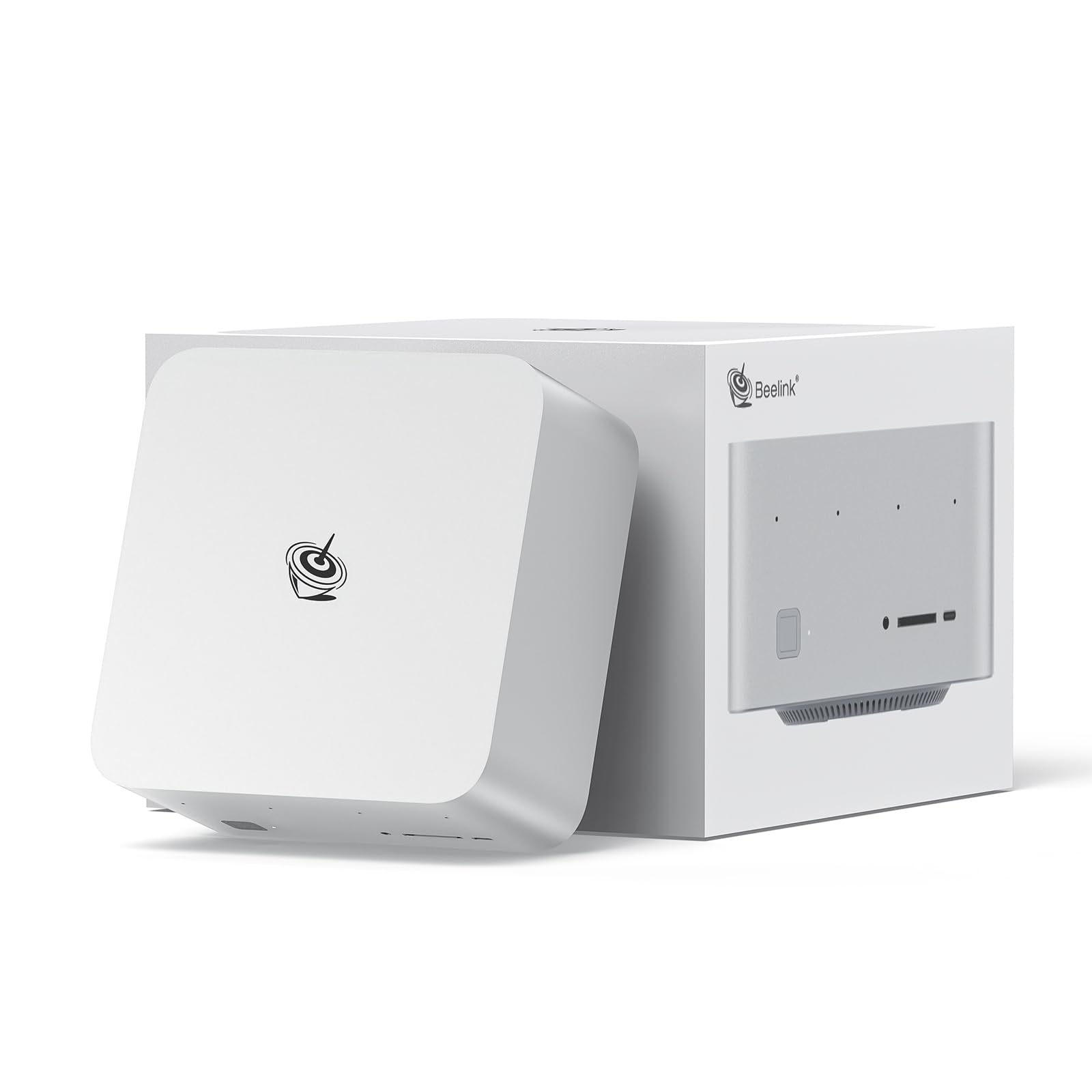
This Beelink desktop targets home labs and small teams that want 70B-class local inference in a compact chassis without assembling
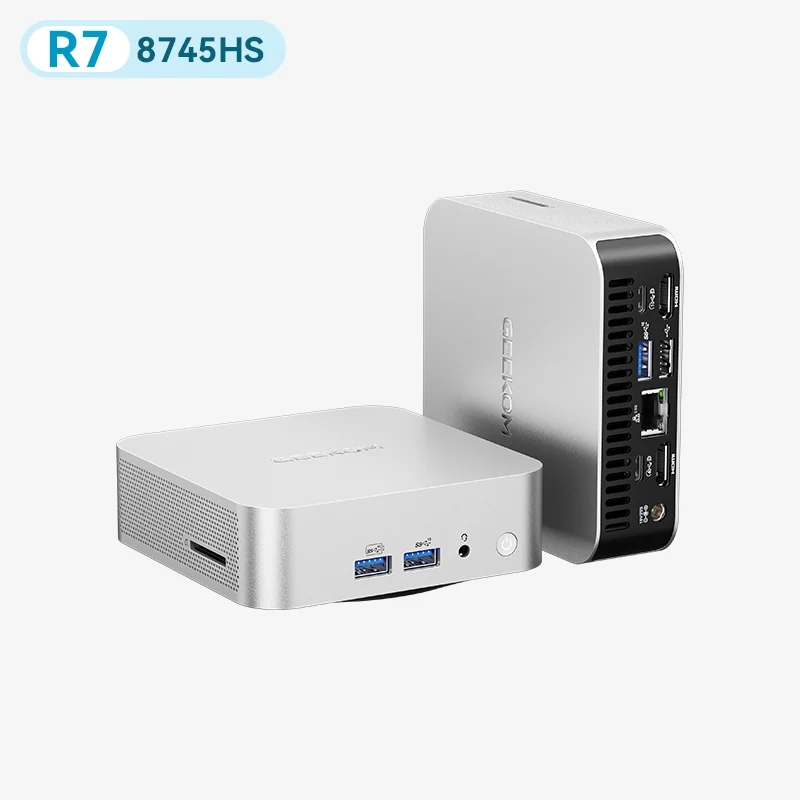
This GEEKOM mini PC is positioned as a general workstation for people whose day involves code builds, design files, 4K exports, an