amd
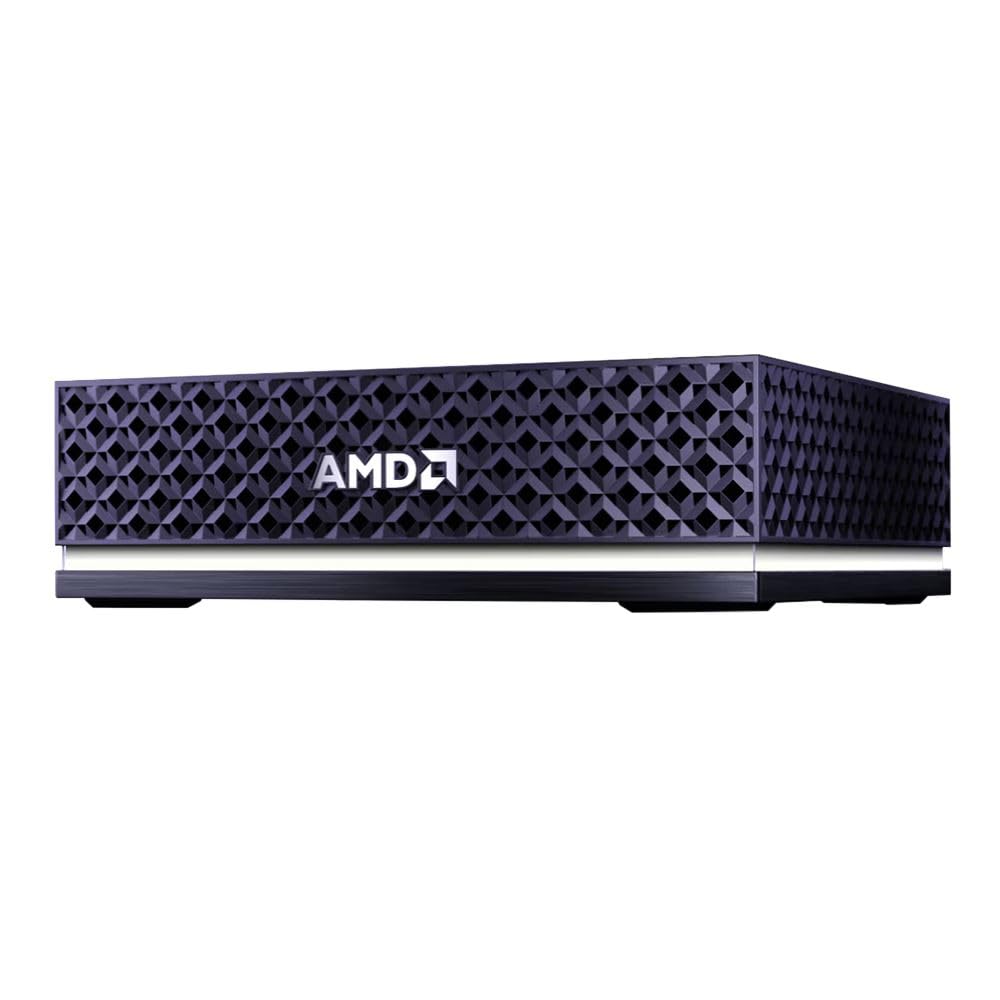
AMD Ryzen AI Halo (Ryzen AI Max+ 395, 128GB LPDDR5X / 2TB, Linux)
If you want to run large local models at home without building a tower with multiple graphics cards, this AMD machine is designed
128GB50 TOPSStrix Halo (Max+ 395)

This GMKTec desktop is the compact end of the Strix Halo class, for people who want the largest models that will fit in a desk-sized machine. The Ryzen AI Max+ 395 provides sixteen Zen 5 cores and thirty-two threads to 5.1GHz with 64MB of L3 cache, the Radeon 8060S adds 40 RDNA 3.5 cores, and a 50-TOPS XDNA 2 neural processor brings combined output to 126 TOPS. Memory is the reason to buy it, with 128GB of LPDDR5X-8000 soldered on board and up to 96GB assignable as graphics memory through AMD software, so weights and context share one pool without the VRAM wall that caps most compact desktops. That supports 30B through 70B quantized models, on-device image generation alongside a chat session, document retrieval, batch OCR, transcription, and vision pipelines, and the vendor cites even larger models at reduced precision within the same pool. Storage starts at 2TB of PCIe 4.0 NVMe with a second M.2 slot taking expansion to 8TB for a full library. Ports include dual USB4 at 40 gigabits per second, three USB 3.2 Gen2 ports, two USB 2.0 ports, HDMI 2.1 to 8K and 60Hz, DisplayPort 1.4, Wi-Fi 7, Bluetooth 5.4, an SD 4.0 reader, and a single 2.5-gigabit Ethernet port supplied through an external power pack. A triple-heat-pipe stack with dual CPU fans plus a DDR and SSD fan keeps the sealed tool-less chassis steady under sustained load. Plan a single large model resident at a time so context and weights fit comfortably together in the shared pool. The memory is a fixed ceiling that cannot be expanded, some listings mislabel the graphics engine while the spec table identifies the Radeon 8060S, and the single wired port trades against workstation-class alternatives with more expansion.
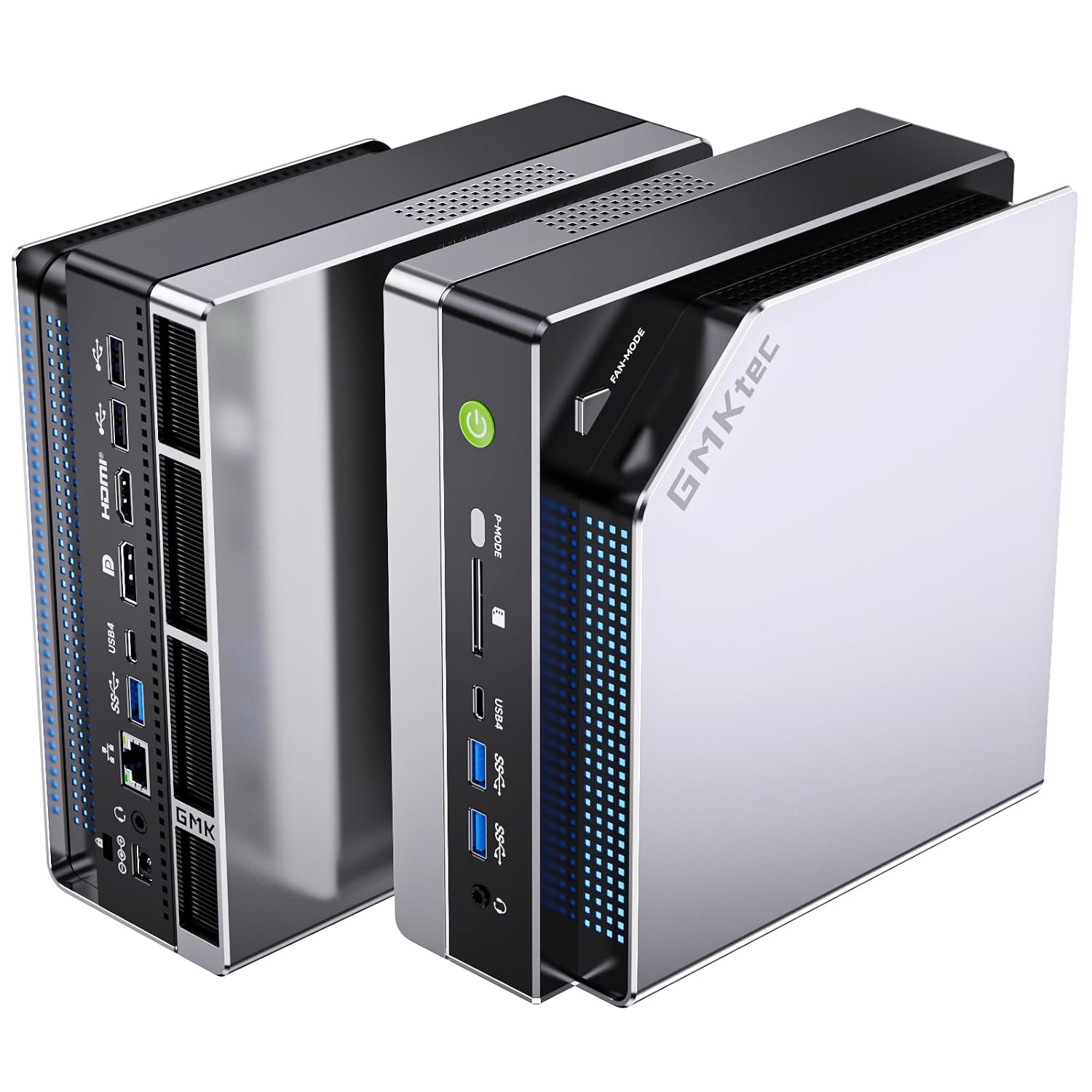
The GMKtec EVO-X2 in its 128GB configuration is a mini PC for local LLMs with 128GB of unified memory — the compact end of the Strix Halo class, for people who want the largest models a desk-sized machine can hold. It runs AMD's Ryzen AI Max+ 395: sixteen Zen 5 cores, thirty-two threads, up to 5.1GHz, 64MB of L3 cache, paired with the Radeon 8060S graphics (40 RDNA 3.5 cores) and a 50-TOPS XDNA 2 NPU for 126 total platform TOPS. The memory is why you buy this machine. A full 128GB of LPDDR5X-8000 is soldered on board, and up to 96GB of that pool can be allocated to the graphics engine as VRAM through AMD's software. That shared pool removes the VRAM wall that caps most mini PCs: 30B-to-70B local models fit, on-device image generation runs alongside a chat session, and the vendor's own figures include a 235B model at Q4 quantization with room to spare. If you are shopping for a large local model mini PC, this is the headroom those words promise, delivered as a mini PC for local LLMs with 128GB in a sealed, tool-less chassis rather than a rackable workstation. Everything else is flagship-grade for a 128GB unified memory mini PC. Storage is 2TB of PCIe 4.0 NVMe with a second M.2 slot taking expansion to 8TB. I/O covers dual USB4 at 40Gbps, three USB 3.2 Gen2 ports, two USB 2.0 ports, HDMI 2.1 to 8K/60, DisplayPort 1.4, Wi-Fi 7, Bluetooth 5.4, and an SD 4.0 reader. A triple-heat-pipe cooling stack with dual CPU fans and a dedicated DDR/SSD fan keeps it steady under sustained load, and the network side runs a single 2.5GbE port. Two honest notes. First, the 128GB is soldered in eight 16GB channels — a ceiling, not an upgrade path, so buy the capacity you expect to need. One spec quirk worth knowing: some listings title the GPU "8090S", but the on-page specification table and the Max+ 395 platform both identify it as the Radeon 8060S. Second, the network is a single 2.5GbE port and there is no full-length PCIe x16 slot; if a rackable workstation with dual 10GbE is what you actually need, a different machine class will serve you better. For readers who want the most local-model headroom a compact box can hold — a mini PC for local LLMs with 128GB by any fair description — this is the one to shortlist, typically in the $3,500–3,800 range, and let the live listing be the source of truth. See current availability on the Amazon listing.
If you want to run large local models at home without building a tower with multiple graphics cards, this AMD machine is designed
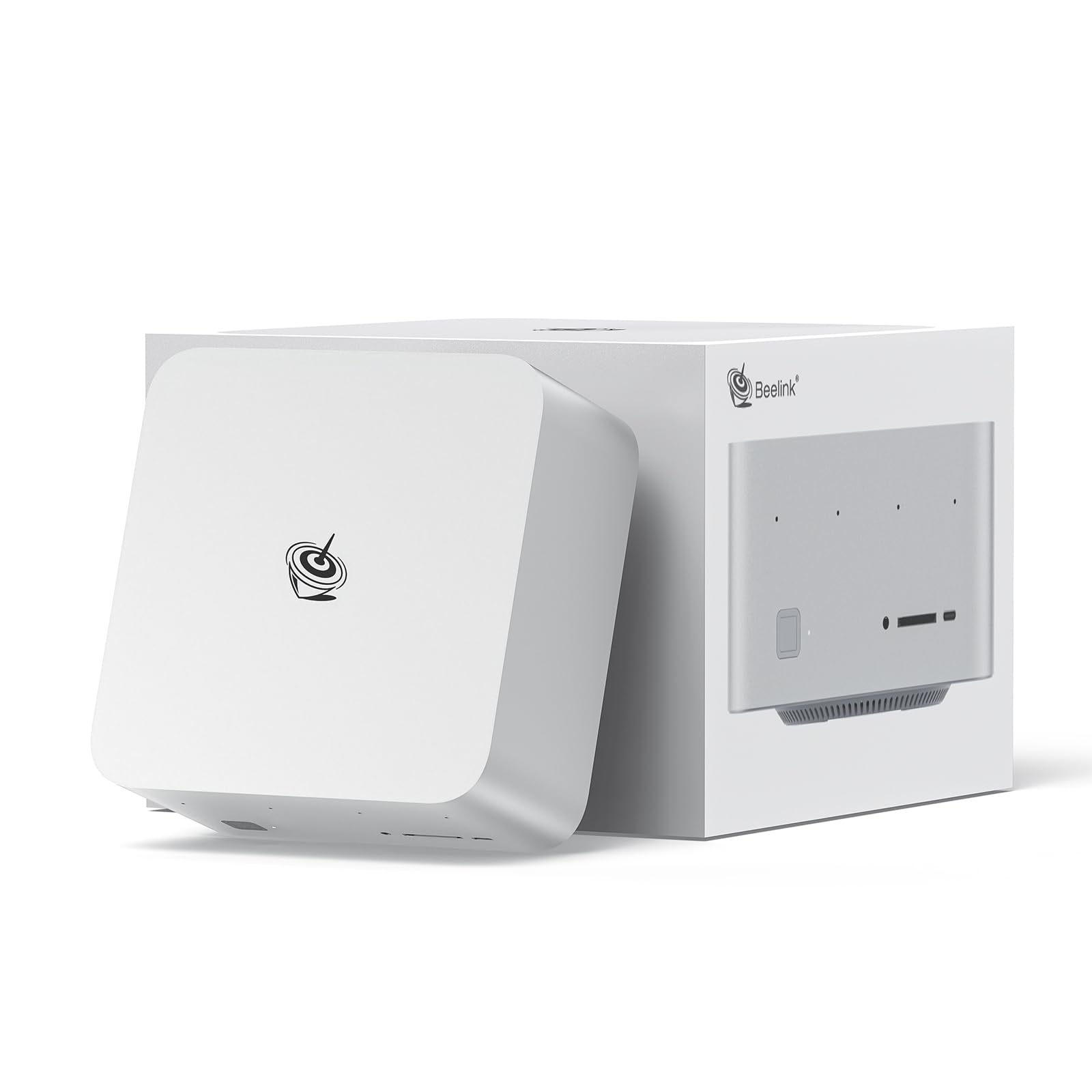
This Beelink desktop targets home labs and small teams that want 70B-class local inference in a compact chassis without assembling
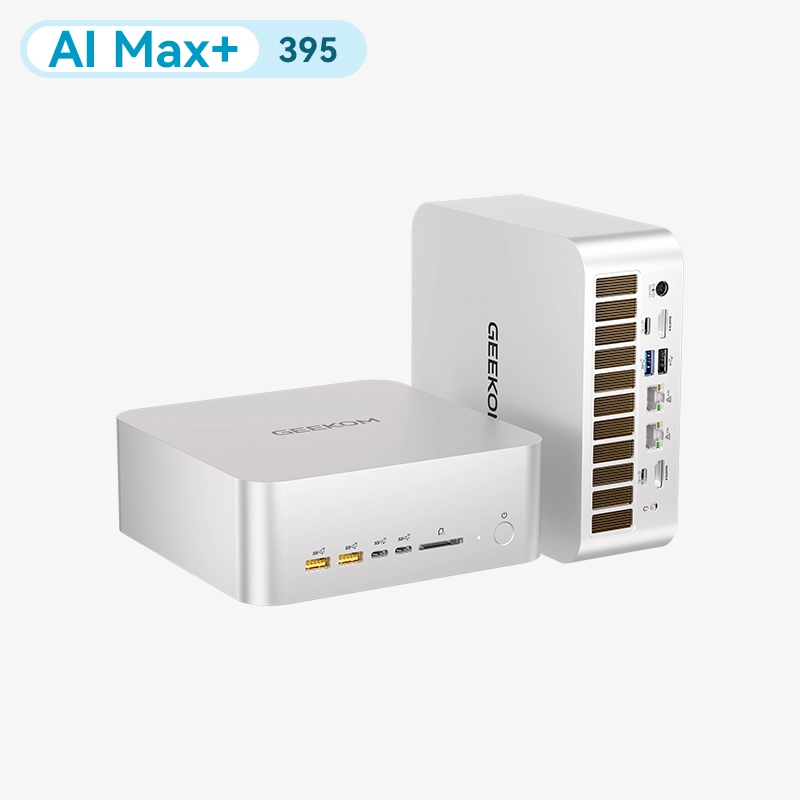
This GEEKOM machine sits at the top of the A-series by memory capacity, for people whose local models have outgrown 32GB or 64GB t
This machine is shortlisted in these situations: