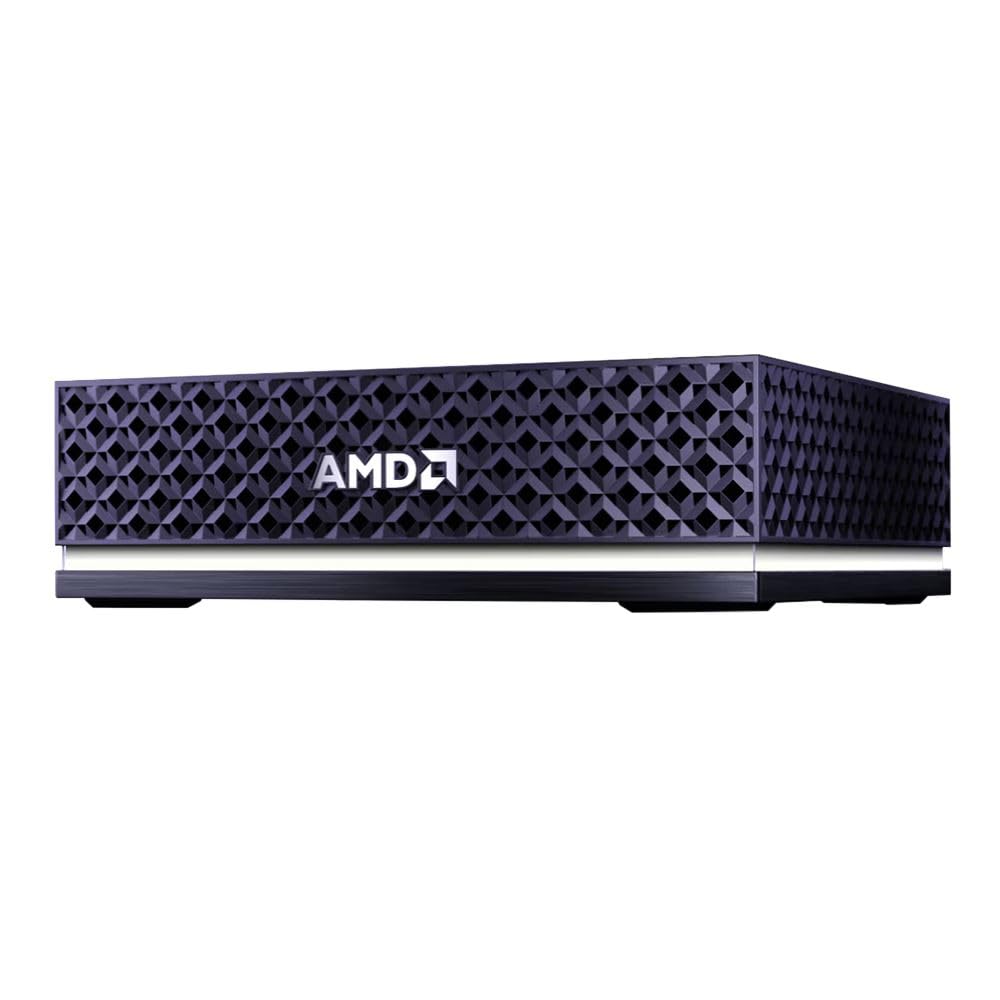
amd
AMD Ryzen AI Halo (Ryzen AI Max+ 395, 128GB LPDDR5X / 2TB, Linux)
If you want to run large local models at home without building a tower with multiple graphics cards, this AMD machine is designed
128GB50 TOPSStrix Halo (Max+ 395)

This Beelink desktop targets home labs and small teams that want 70B-class local inference in a compact chassis without assembling separate graphics cards. The Ryzen AI Max+ 395 provides 16 Zen 5 cores and 32 threads boosting to 5.1GHz, the Radeon 8060S adds 40 RDNA 3.5 compute units with 2,560 stream processors, and a 50-TOPS XDNA 2 neural processor lifts combined CPU, GPU, and NPU output to roughly 126 TOPS. The defining choice is 128GB of LPDDR5X memory soldered on the board, with a large portion assignable as graphics memory so model weights and context live in one pool the graphics engine can address directly. That supports quantized 70B-class models, long-context chat, retrieval pipelines, batch OCR, and vision workloads that would exceed smaller unified-memory boxes. Storage starts at 2TB on PCIe 4.0 x4 and expands across dual M.2 slots to 8TB, which keeps a full model library onboard. Connectivity includes two 10-gigabit Ethernet ports for clustering or shared queues, Wi-Fi 7, Bluetooth 5.4, one USB4 port at 40 gigabits per second plus a 10-gigabit USB-C port, two USB 3.2 ports at 10 gigabits, HDMI 2.1 and DisplayPort for up to four screens at 8K and 60Hz, an SD 4.0 reader, dual audio jacks, stereo speakers, and a built-in microphone with five-meter pickup. MSC2.0 cooling is rated near 32dB, and Beelink includes a three-year warranty with lifetime technical support. Keep model files on the second drive when possible so downloads never crowd the working system volume. For shared home use, plan how several people will reach the machine, since one chassis mainly serves a single desk or control point. The memory is fixed at purchase, so choose this tier when 70B-class capacity is required now, and check the live listing for price and stock.
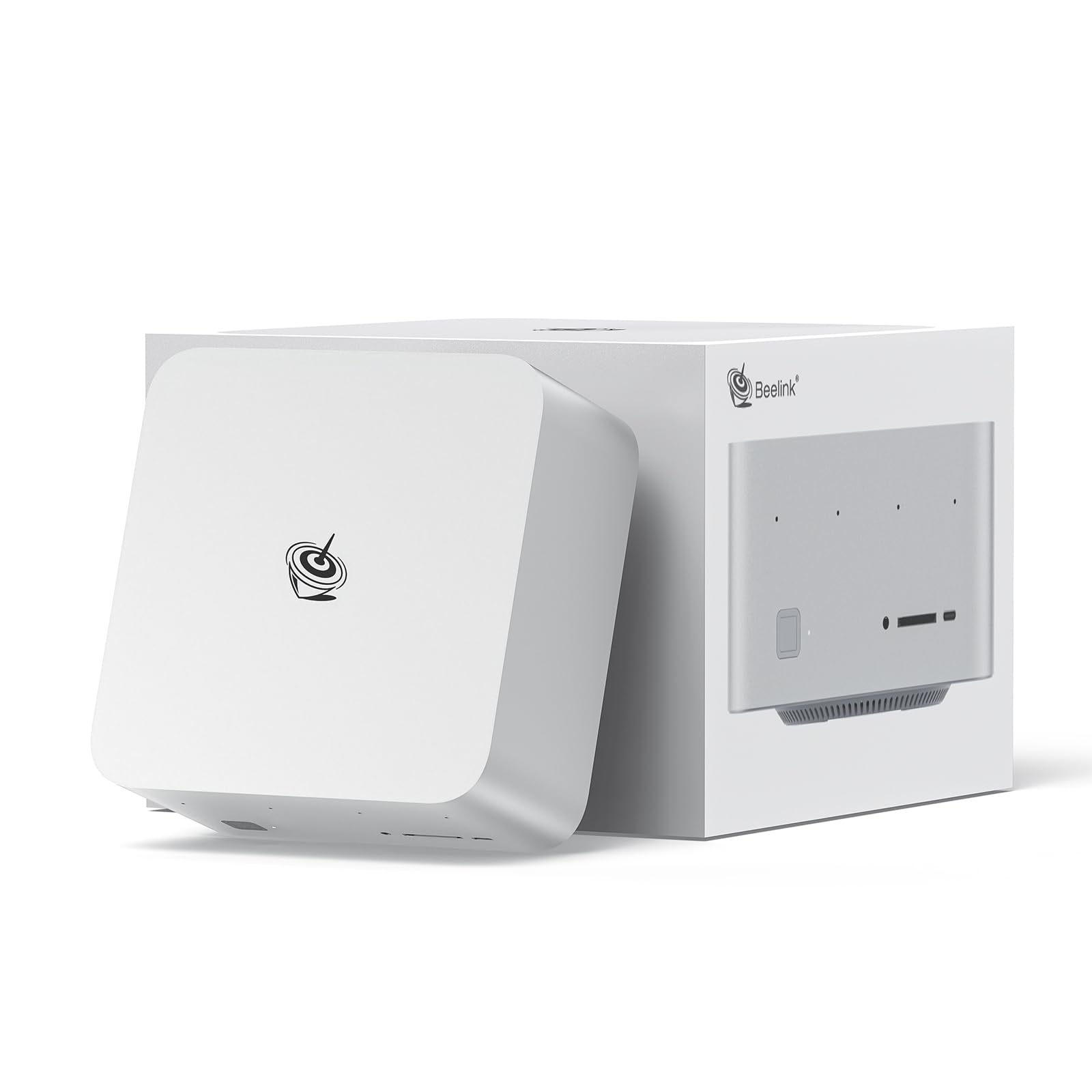
The Beelink GTR9 Pro 395 is the answer for a specific kind of buyer: someone who wants a mini PC for running LLMs locally at the top of the size range and does not want to build or rack anything. It pairs AMD's Ryzen AI Max+ 395 — sixteen Zen 5 cores and thirty-two threads boosting to 5.1GHz — with the Radeon 8060S graphics (RDNA 3.5, 40 compute units, 2,560 stream processors) and a 50-TOPS XDNA 2 NPU, for roughly 126 combined TOPS across CPU, GPU, and NPU. The headline is the memory. The GTR9 Pro carries 128GB of LPDDR5X on the board, and a large share of that unified pool can be allocated to the graphics engine as VRAM. That is what makes it a genuine mini PC for running LLMs locally at the 70B-class scale: the weights and their context live in one pool the GPU can address directly, rather than being split across a separate card's memory. For quantized 70B-class models and long-context work, this is the class of machine that turns those models into a desk-side reality. In short, it is the local AI mini PC in Beelink's range built for exactly this workload. The chassis is built around it. Dual 10Gbps Ethernet ports make the GTR9 Pro a credible node in a two- or three-unit inference cluster, which is the other half of the local-LLM story for people who split models or share a queue. Storage runs on dual M.2 PCIe 4.0 x4 slots — 2TB pre-installed, up to 8TB total — so a full model library can live on-board. Output covers up to four screens through HDMI 2.1 and DisplayPort at 8K/60, and the port set adds USB4 at 40Gbps, a 10Gbps USB-C, two more 10Gbps USB-A ports, Wi-Fi 7, Bluetooth 5.4, and an SD 4.0 card reader. Beelink's MSC2.0 cooling targets a 32dB noise floor, and the listing adds dual speakers and an AI microphone with five-meter pickup. A 3-year warranty and lifetime technical support round it out. Be clear about the trade-offs. The 128GB is soldered, so there is no memory upgrade path: this is a fixed-ceiling machine, and it is priced like the top of the stack, typically in the $4,200–4,500 range, with the live listing as the source of truth. If your local models top out at 14B–32B, the 64GB tier is the better spend. If you want a mini PC for running LLMs locally at the largest scale a compact chassis allows, and you are comfortable with a fixed 128GB AI PC, the GTR9 Pro is the one to check — see current availability on Amazon.
If you want to run large local models at home without building a tower with multiple graphics cards, this AMD machine is designed
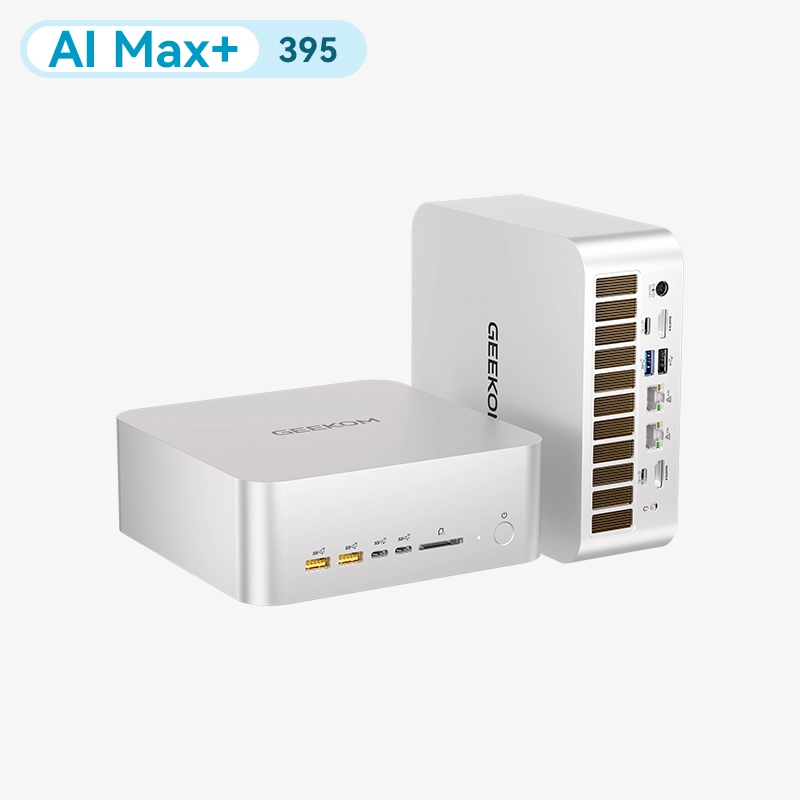
This GEEKOM machine sits at the top of the A-series by memory capacity, for people whose local models have outgrown 32GB or 64GB t
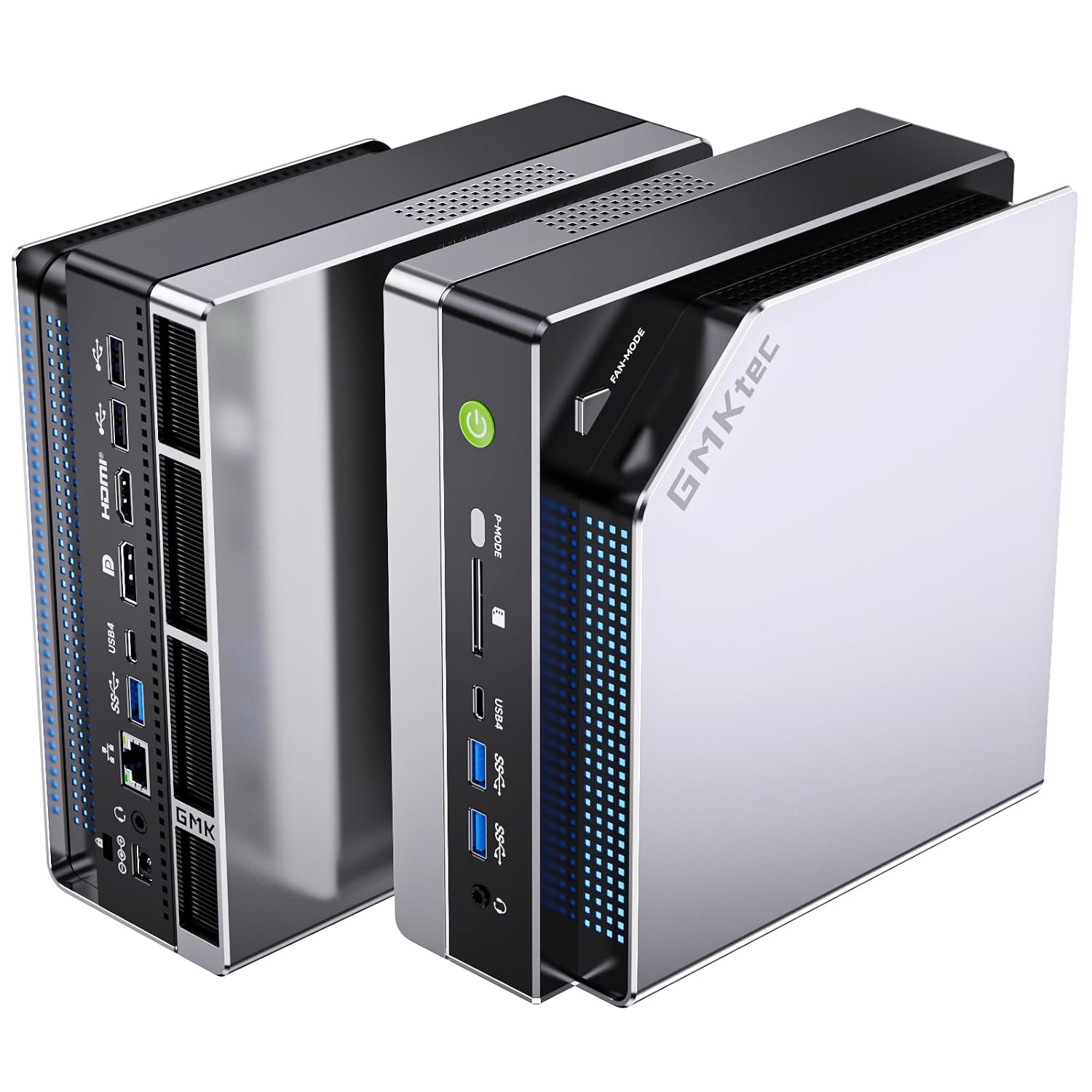
This GMKTec desktop is the compact end of the Strix Halo class, for people who want the largest models that will fit in a desk-siz
This machine is shortlisted in these situations: