amd
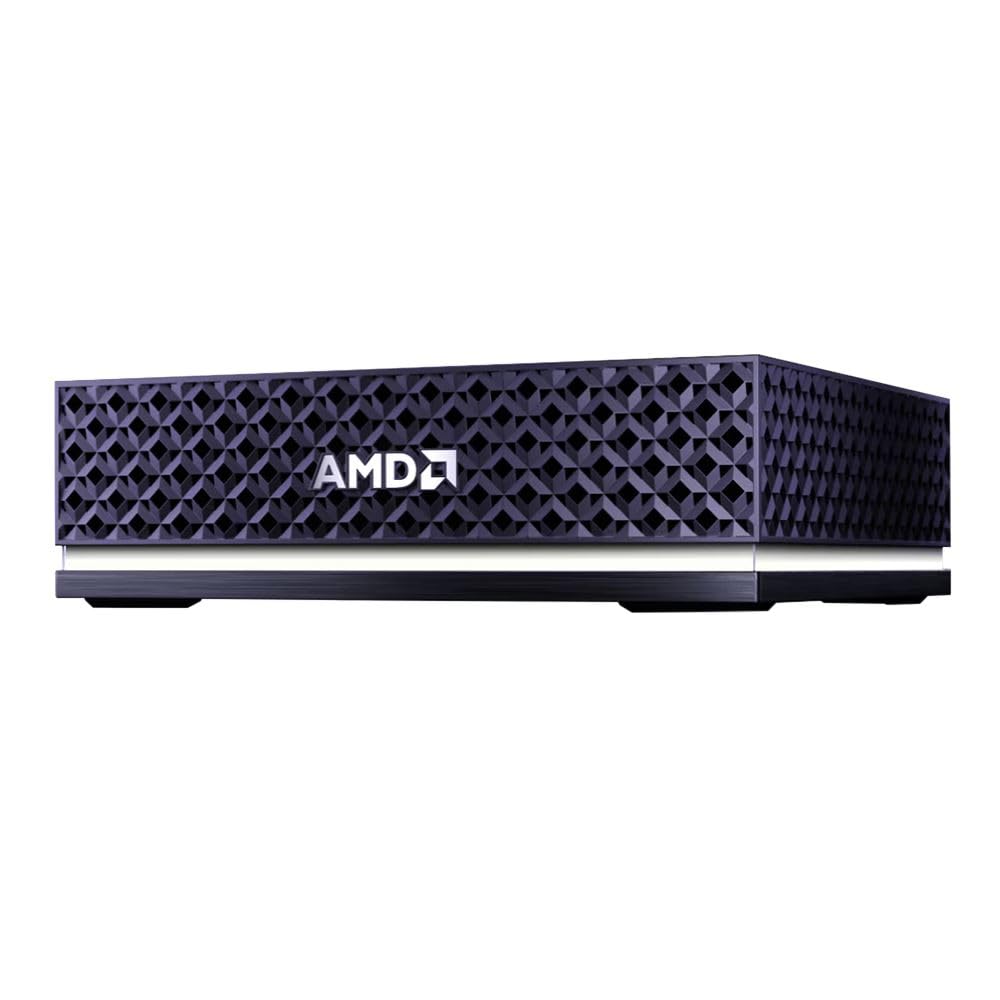
AMD Ryzen AI Halo (Ryzen AI Max+ 395, 128GB LPDDR5X / 2TB, Linux)
If you want to run large local models at home without building a tower with multiple graphics cards, this AMD machine is designed
128GB50 TOPSStrix Halo (Max+ 395)

The entry, the middle, and the professional rung
For the people who need a discrete card, the question is not whether, it is which, and the honest answer is that there is a value ladder in the discrete AMD lineup, and the ladder is different from the one the gaming market knows. The difference is that the workload is inference, and the number that matters is the VRAM and its bandwidth, not the frame rate, and the card market is three rungs deep, with a different best answer at each one depending on the size of the model you are actually running, and this article walks those rungs and lands on where the per-dollar inference peaks.
The bottom rung is the entry discrete card, the mid-range RX class, with sixteen to eighteen gigabytes of VRAM. It is the first step into the discrete territory, the card for the person upgrading from a laptop or stepping into a tower, and it is the card that runs the seven and fourteen-billion models comfortably and stretches the twenty-seven-billion model to a quantization that fits but leaves little room for a long context. It is the cheapest discrete answer per dollar, but it is the cheapest answer for the smaller model, and it is not the card for someone whose target is the twenty-seven-billion with a working context, because the memory pool runs out before the context does.
The middle rung is the high-VRAM card, the twenty-four to thirty-two gigabyte class, and it is the discrete answer for the twenty-seven-billion model treated as a first-class workload. It is the card the person who has decided on the twenty-seven-billion, and on a card, and on a tower, should be looking at, because it gives the model plus a real working context without the price of the next rung. It is also, for this specific workload, where the per-dollar inference peaks, because the VRAM is the binding number and this rung gives the most of it per dollar for the model in the class the market is built around. The entry rung is not enough for the context, and the top rung is more than the workload needs, so the middle rung is the value answer for the interactive twenty-seven-billion in a tower.
The top rung is the professional card, the Radeon PRO class, and it is a different animal, in both price and purpose. It exists for the workloads that fall outside the default, the fine-tuning, the training, the concurrent multi-user serving, and the models that are much larger than the twenty-seven-billion interactive target. It has a large, high-bandwidth memory pool and the headroom those workloads call for, and it costs like a professional product. For the person in this article, the one who has decided on the interactive twenty-seven-billion, the top rung is not the answer, it is the boundary of the market, the point where the per-dollar framing stops being the deciding number and the workload itself becomes the deciding number. It is the right card for a different question, and buying it for the interactive workload is paying the professional premium for a capability the workload does not use.
So the per-dollar question resolves cleanly once the rungs are separated. The per-dollar inference of the entry rung is the per-dollar of the smaller model, and it is the best per dollar for the seven and fourteen-billion class. The per-dollar inference of the middle rung is the per-dollar of the twenty-seven-billion, and it is the best per dollar for the model the market is built around. The per-dollar inference of the top rung is the per-dollar of the training and the very large model, and for the interactive workload it is simply too much card per dollar. The ladder is the reason the card market is not one price, it is three prices for three workloads, and the workloads are the smaller model, the twenty-seven-billion interactive, and the training and the multi-user.
The honest close, and it is the reason the APU keeps a separate article of its own. The person who needs the twenty-seven-billion interactive and is a card person in a tower buys the middle rung, the high-VRAM card, because the VRAM is the number, and the per-dollar and the model and the rung all point at the same card. The person doing the smaller model buys the entry rung. The person doing the training buys the top rung. And the person doing the twenty-seven-billion interactive who is not a card person, who is not in a tower, and who wants the small and the quiet and the machine that sits on the desk, is not in the card market at all, and is in the APU market, where the shared memory is the VRAM and the core is on the die. That is the card ladder, and it is the answer the ladder has always been giving, and the middle rung is the answer for this market, because the model and the per-dollar and the VRAM all land on the same card, and the rest of the ladder is the rest of the work.
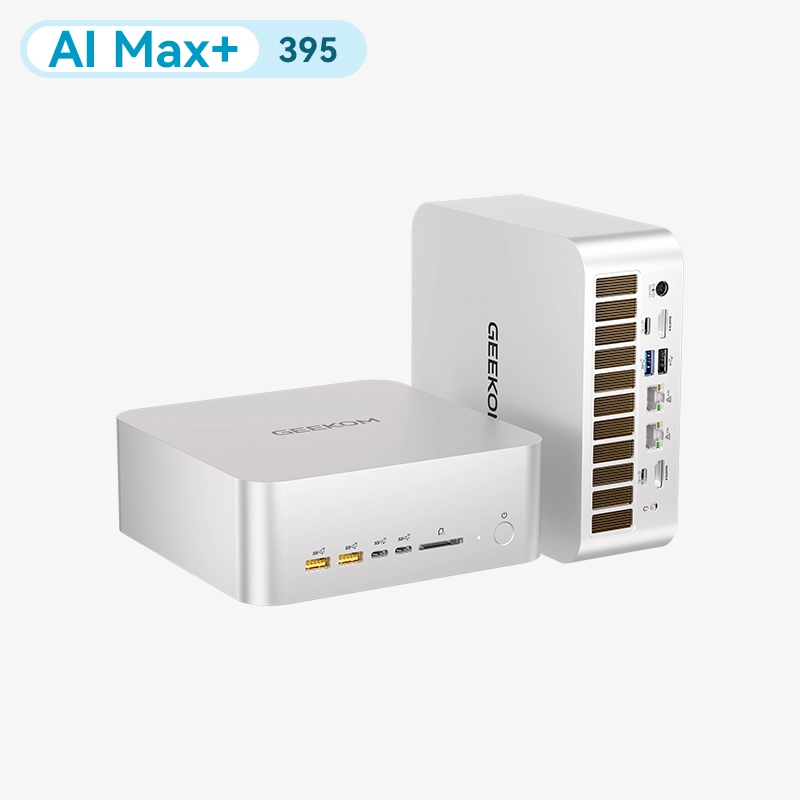
This GEEKOM machine sits at the top of the A-series by memory capacity, for people whose local models have outgrown 32GB or 64GB tiers. It uses the Ryzen AI Max+ 395 or 388 platform with up to sixteen Zen 5 cores and thirty-two threads, the Radeon 8060S with 40 RDNA 3.5 compute units, a 50-TOPS neural processor, and 126 combined platform TOPS. The defining feature is unified LPDDR5X-8000 memory up to 128GB shared between CPU and graphics, where bandwidth near 8000MHz supports tokens per second while weights and context share one pool the GPU can address directly. That lets quantized 30B to 70B models load locally, image generation can run alongside a chat session, and small teams can use it as a private inference or retrieval box for document search, batch OCR, transcription, and vision checks. The CNC-cut aluminum chassis measures 171 by 171 by 70.9mm at 1.9kg and uses a vapor chamber with dual fans sized for sustained inference and 4K editing rather than brief peaks. Four displays run through dual 40-gigabit USB4 ports with DisplayPort 2.1 and dual HDMI 2.1 FRL at 8K and 60Hz, and two M.2 2280 NVMe slots run in RAID 0 or 1 for up to 8TB of model and dataset storage. Dual 2.5-gigabit Ethernet, Wi-Fi 7, and an SD reader cover wired links and camera work. For households sharing the machine, plan one model resident at a time rather than several large ones together, since context and weights share the same fixed pool on every run. The memory is fixed rather than upgradable and pricing starts higher than the HX 470 tier, so choose this only when 70B-class capacity is a real requirement.
If you want to run large local models at home without building a tower with multiple graphics cards, this AMD machine is designed
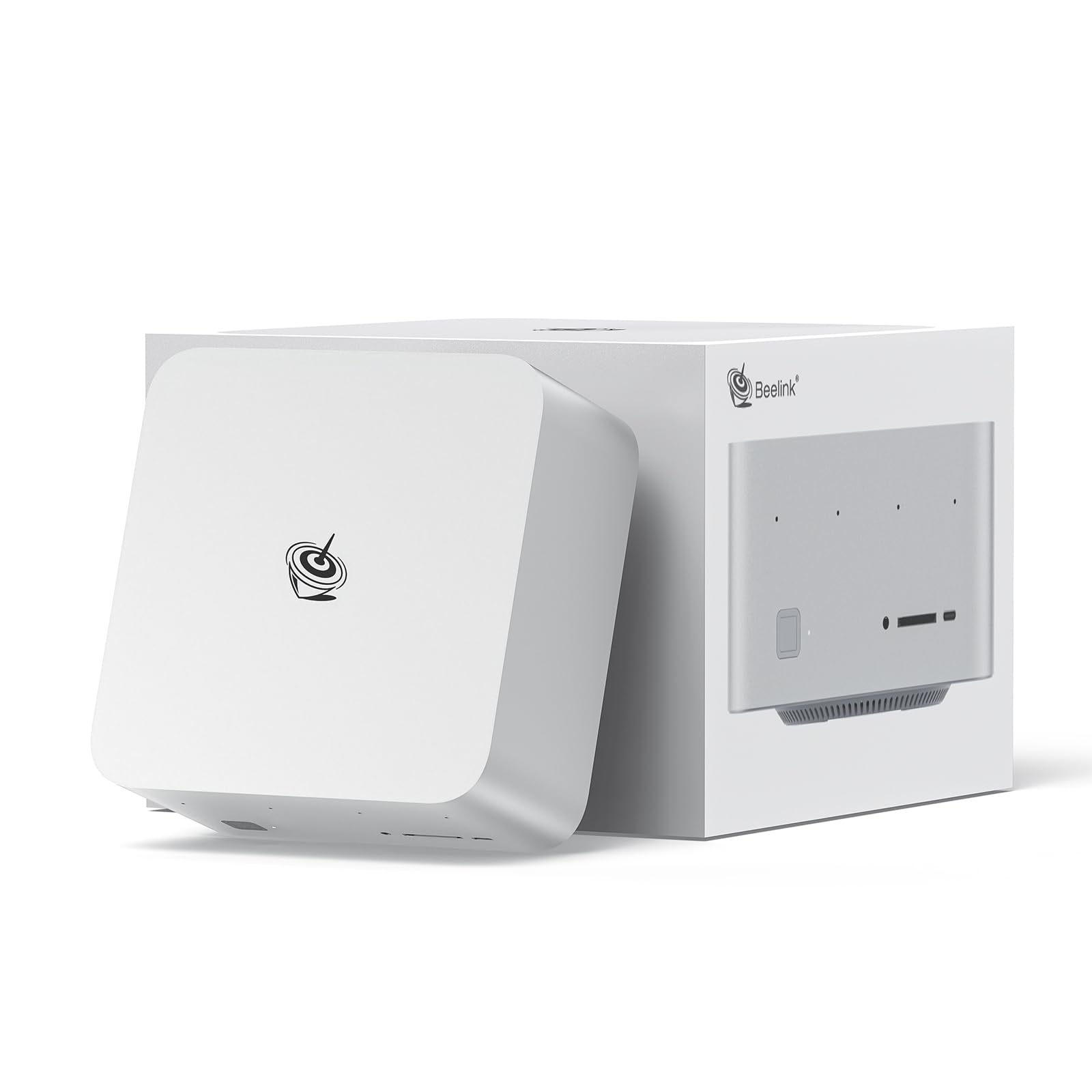
This Beelink desktop targets home labs and small teams that want 70B-class local inference in a compact chassis without assembling
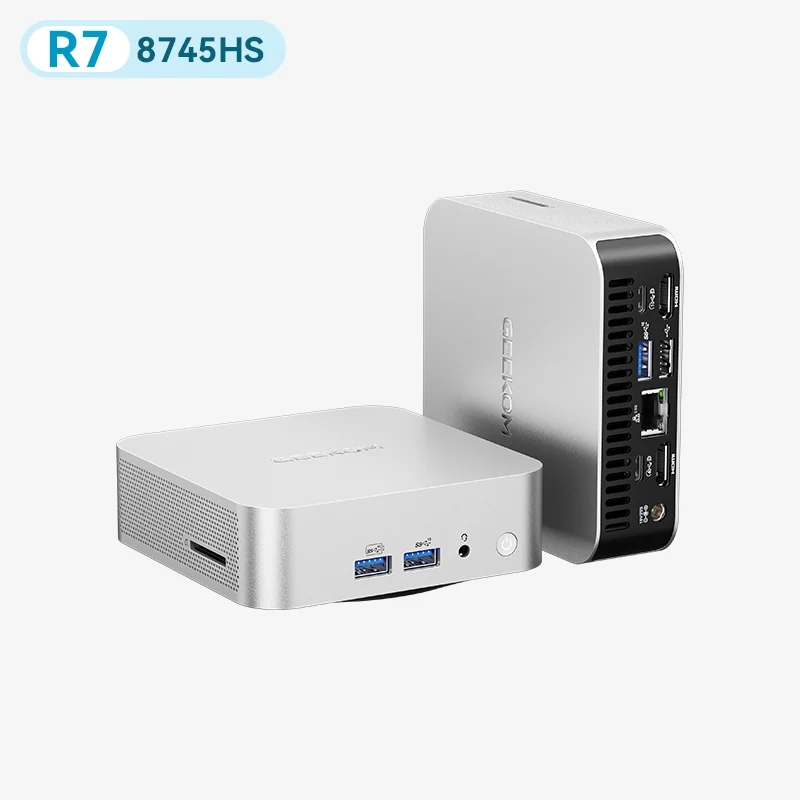
This GEEKOM mini PC is positioned as a general workstation for people whose day involves code builds, design files, 4K exports, an