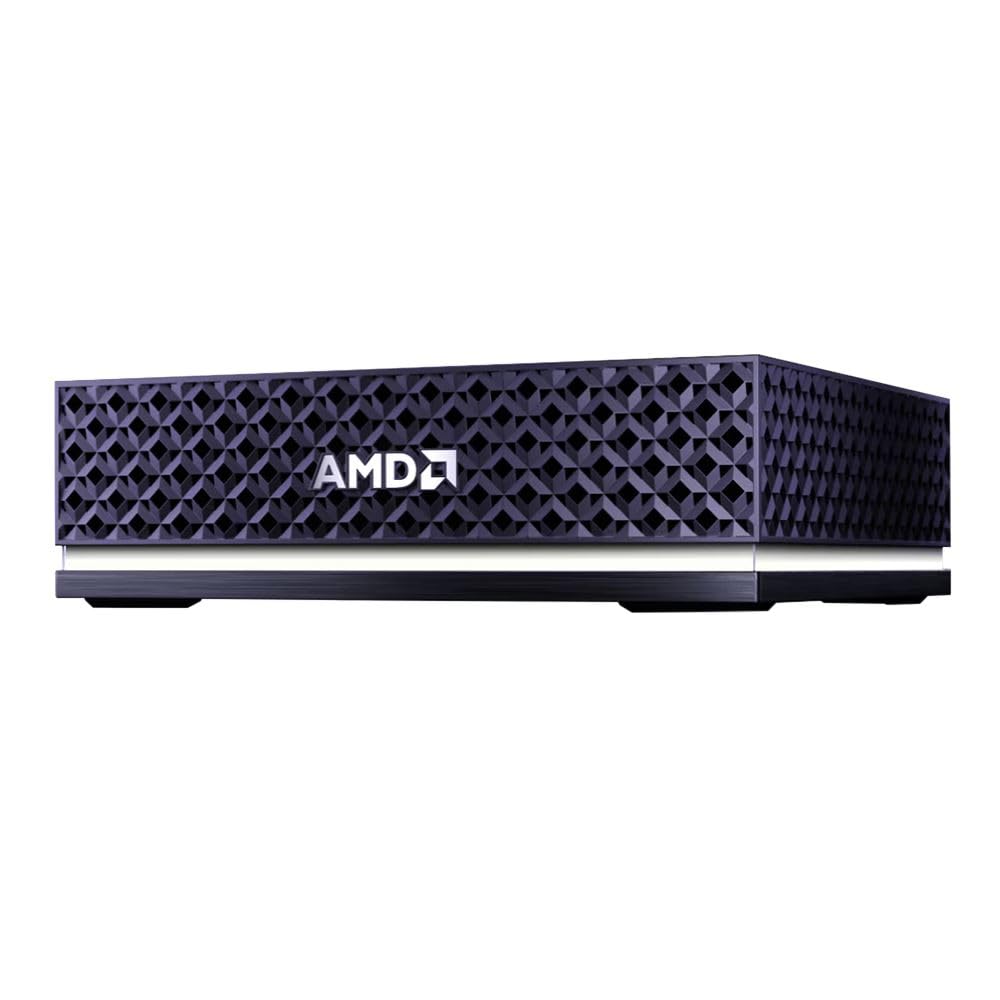
amd
AMD Ryzen AI Halo (Ryzen AI Max+ 395, 128GB LPDDR5X / 2TB, Linux)
If you want to run large local models at home without building a tower with multiple graphics cards, this AMD machine is designed
128GB50 TOPSStrix Halo (Max+ 395)

This MINISFORUM workstation is built for buyers who have outgrown the mini-PC tier, in a larger rackable chassis with a built-in 320W supply and slide-out tool-less access near 3.8 liters. The Ryzen AI Max+ 395 provides sixteen Zen 5 cores and thirty-two threads to 5.1GHz with 64MB of L3 cache, the Radeon 8060S handles inference, and a 50-TOPS neural processor brings combined output to 126 TOPS. The 128GB of LPDDR5X-8000 unified memory is shared between CPU and graphics with up to 96GB assignable so 30B to 70B models run at working context, image generation runs on device, and larger models can be served across clustered units for multi-model or retrieval workloads. That removes the VRAM wall that caps many discrete-card boxes at far smaller figures, which matters for private inference, batch OCR, transcription, and vision pipelines without a cloud round trip. Storage is dual M.2 2280 PCIe 4.0 x4 to 16TB in RAID 0 or 1 with 2TB pre-installed, and dual 10-gigabit Ethernet supports NAS, firewall, and link-aggregation roles beyond the 2.5-gigabit standard in smaller boxes. USB4 V2 at 80 gigabits per second plus two 40-gigabit USB4 ports, HDMI 2.1 to 8K and 60Hz, a full-length PCIe x16 slot, Wi-Fi 7, Bluetooth 5.4, and dual noise-cancelling microphones round out workstation input and output. Four switchable modes across performance, balanced, silent, and rack settings plus a reserved cluster power-on interface make it a 2U rack deployment option. The 130W sustained draw means higher power and heat than the mini-PC tier and the memory is fixed at purchase, so allow airflow and confirm the live listing before ordering. For shared rooms, keep the machine in a rack or cabinet where the 320W supply has clear ventilation during long runs.
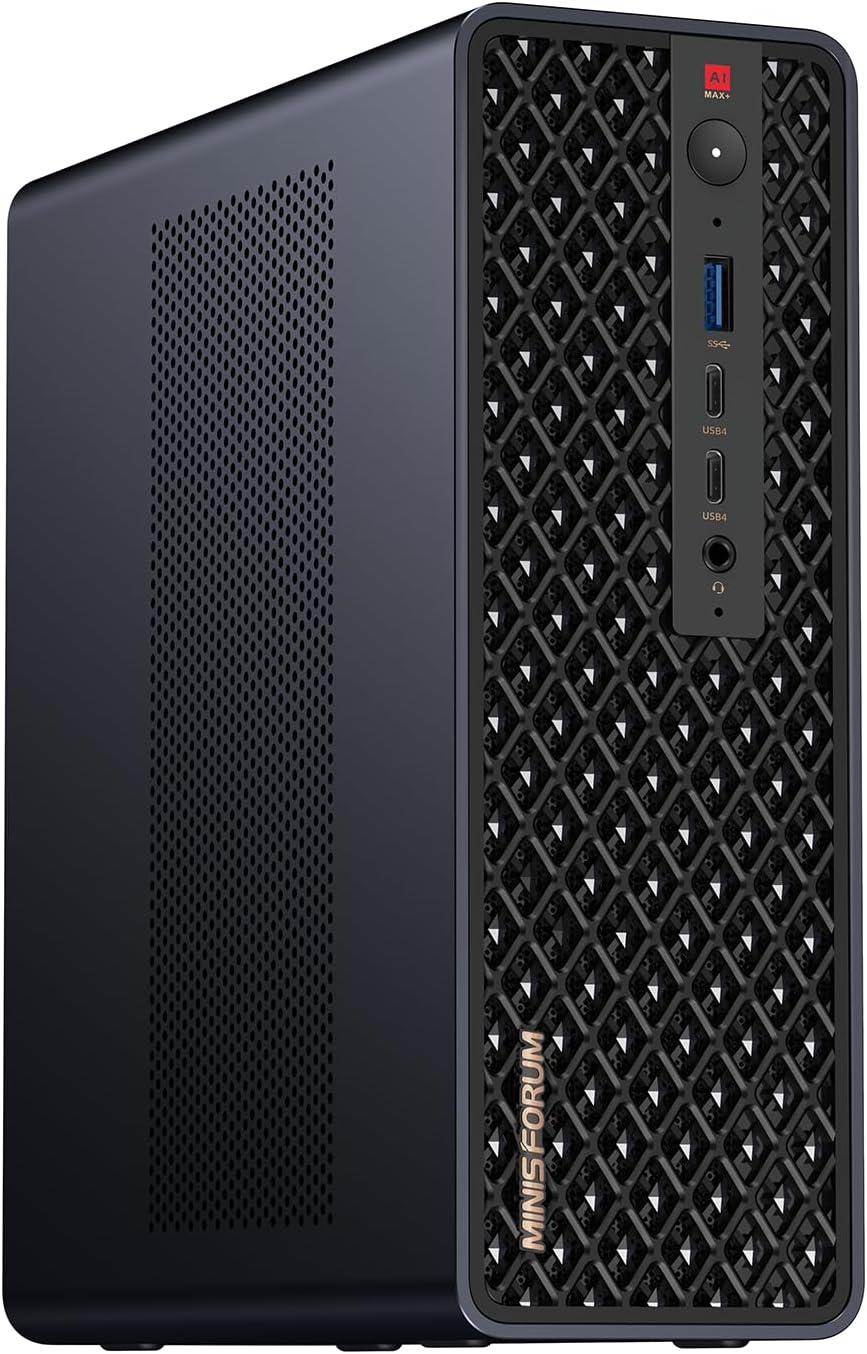
The MS-S1 MAX is a rackable local AI workstation, and it is built for a buyer who has outgrown the mini-PC tier entirely. It runs the AMD Ryzen AI Max+ 395 — a Strix Halo desktop-class APU with sixteen cores, thirty-two threads, up to 5.1GHz, and 64MB of L3 cache — paired with the Radeon 8060S and a 50-TOPS NPU for 126 total platform TOPS. The chassis is roughly 3.8 liters with a built-in 320W power supply and a slide-out tool-less design, which is a different class of machine from the 1.5kg boxes that come earlier in the line. A rackable local AI workstation starts with the memory. The MS-S1 MAX ships with 128GB of LPDDR5X-8000 unified memory shared between the CPU and the GPU, with as much as 96GB of it available to the Radeon 8060S as VRAM. That unified-memory design removes the VRAM wall that caps most discrete-GPU boxes at 12GB or 16GB, and it is what lets a single unit run 30B-to-70B local models at working context, do on-device image generation, and — according to the vendor's cluster figures — pair two units to serve a 235B Q4 model or four units for a 671B DeepSeek-R1 Q4. For a mini PC for serious local LLMs that wants private, on-device inference without a cloud round-trip, this is the headroom tier. As a rackable local AI workstation, it is the machine to consider when the mini-PC ceiling becomes the limiting factor. The I/O and deployment options are workstation-grade. Storage is dual M.2 2280 PCIe 4.0 x4, up to 16TB total with RAID 0 or 1, and 2TB is pre-installed. The network stack includes dual 10GbE LAN — a step above the 2.5GbE on the mini-PC tier — for serious NAS, firewall, and link-aggregation work. USB4 V2 at 80Gbps plus two 40Gbps USB4 ports, HDMI 2.1 out to 8K/60, a full-length PCIe x16 expansion slot, Wi-Fi 7, Bluetooth 5.4, and dual AI noise-cancelling microphones round out the outside. The four switchable modes (performance, balanced, silent, rack) and the 2U rack deployment with a reserved cluster power-on interface make it a 128GB rackmount AI PC that belongs in a server closet as much as on a desk. The trade-offs are real and worth stating. The 320W supply and the 130W sustained draw mean higher power consumption and heat than the mini-PC tier, and the 128GB is non-socketed, so the memory is fixed at purchase. The price sits well above the mini-PC class, and the live listing is the source of truth on current cost. As a rackable local AI workstation, the MS-S1 MAX is the pick for a serious homelab AI power user who wants 70B-class local LLMs, multi-model serving, and a machine that can rack next to the rest of the network. Check current availability on Amazon.
If you want to run large local models at home without building a tower with multiple graphics cards, this AMD machine is designed
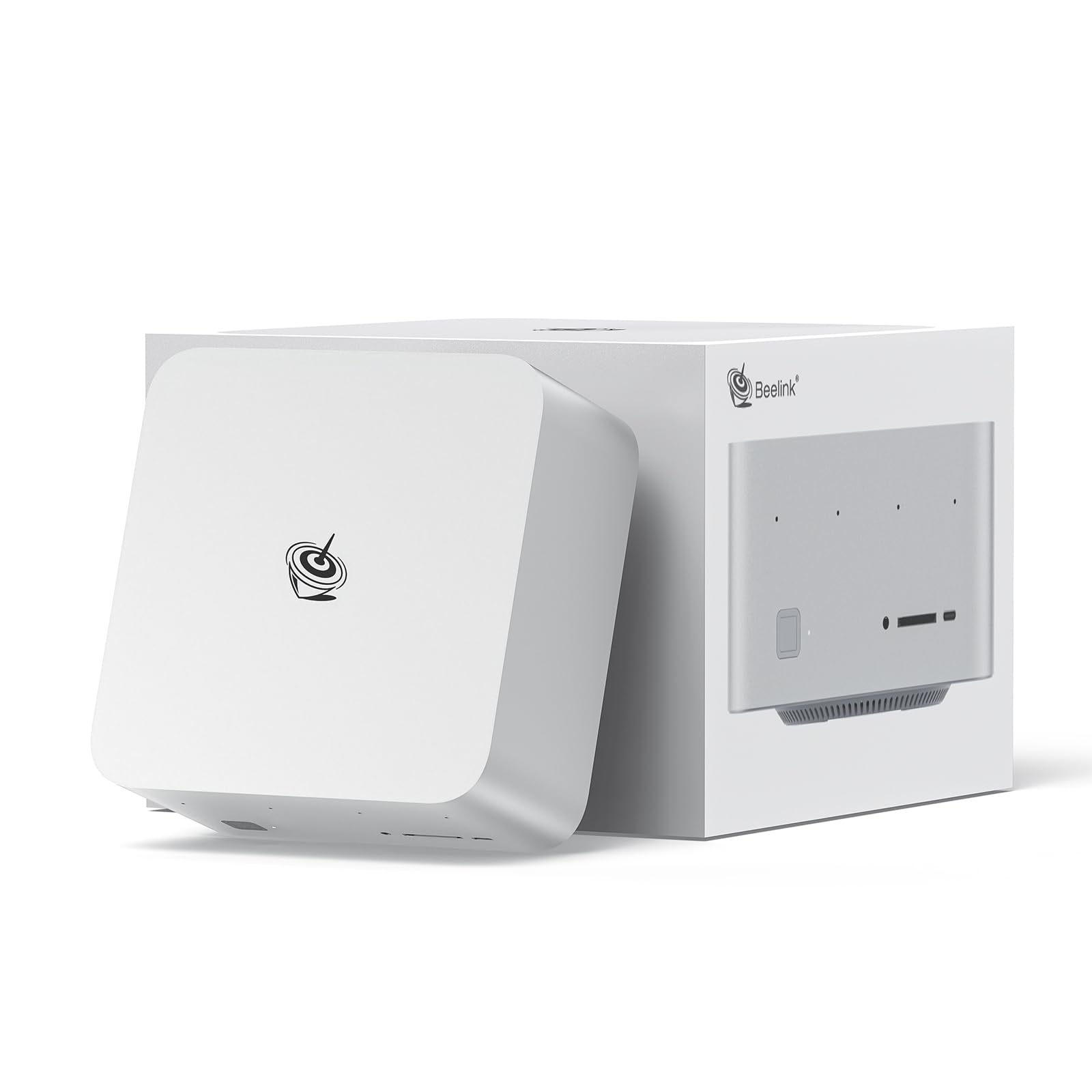
This Beelink desktop targets home labs and small teams that want 70B-class local inference in a compact chassis without assembling
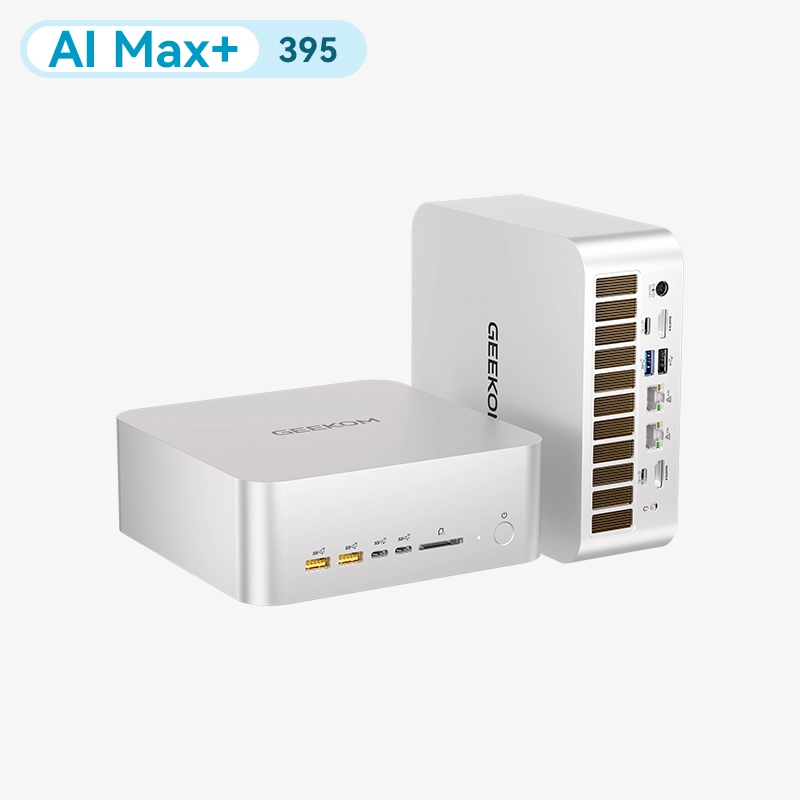
This GEEKOM machine sits at the top of the A-series by memory capacity, for people whose local models have outgrown 32GB or 64GB t
This machine is shortlisted in these situations: