Local AI hardware, explained clearly — start with the guides or browse all 29 machines
WebRevealed — Discovered for You
Categories
Residential & Home Commercial & Small Office Creators & Media Coding & Developers Portable, Events & Field Large Models & Max Memory Residential vs Commercial
Products
All 29 products Compare specs GMKtec MINISFORUM Beelink GEEKOM
Articles & Guides
All articles All 16 guides About
iDisclosure: WebRevealed GPU may earn a commission from qualifying purchases made through links on this page. This does not affect the price you pay or our recommendations. Full disclosure. As an Amazon Associate, SharpNet Solutions earns from qualifying purchases.
Product review · gmktec

GMKTec NucBox M6 Ultra

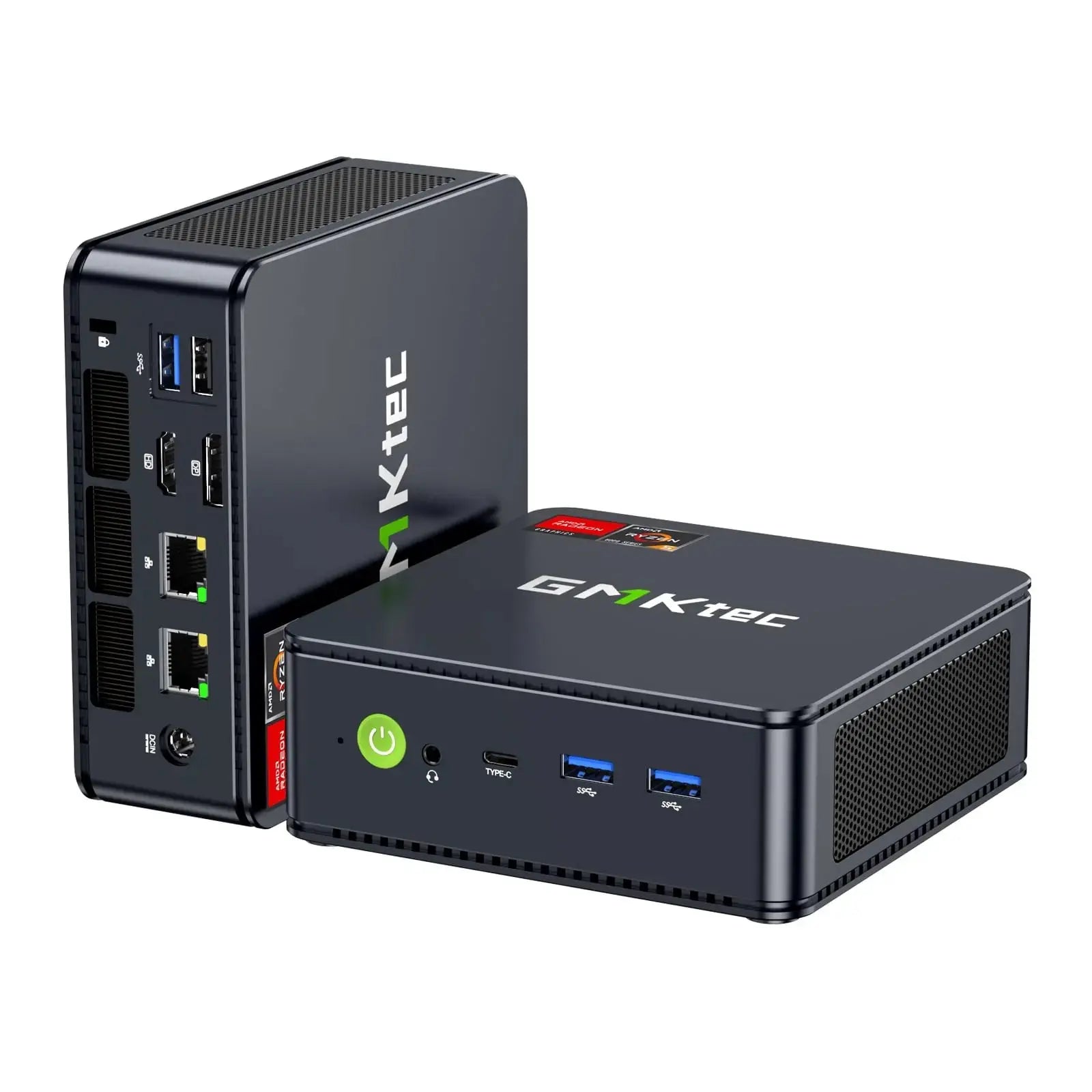
This GMKTec desktop is the lowest-cost way to test whether local AI earns a place in daily work, and it is honest about that ceiling. The Ryzen 5 7640HS provides six Zen 4 cores and twelve threads to 5.0GHz with the Radeon 760M graphics engine of eight RDNA 3 compute units, and there is no neural processor in this generation, so expectations should start at quantized 7B models that run at a responsive clip for a first assistant. Socketed DDR5 on two SO-DIMM slots to 64GB is the quiet strength here, since a larger memory build can stretch toward 14B with a useful context window instead of stranding the buyer at entry capacity. That could also mean embeddings over personal files, batch OCR for small document sets, transcription of short recordings, and quiet Linux duties alongside a small model. The platform stays above bare entry level with USB4 at 40 gigabits per second that keeps an external graphics option open, 2.5-gigabit Ethernet and Wi-Fi 6E for always-on use, Bluetooth 5.3, and a roughly 0.6-liter chassis small enough to hide. M.2 2280 NVMe slots on PCIe 4.0 x4 hold system and library drives, with exact slot counts depending on configuration, so check the listing for the build you will receive. As a first local-AI box it is the most forgiving choice in the line, since memory and storage can grow after purchase, while buyers who need 27B-class inference or dedicated acceleration should step up to NPU-equipped models instead. For a quiet bedroom or study, duty cycle matters more than peak speed, so a small quantized model with a modest context window is the sensible default. If transcription or OCR outgrows the box, move history to external storage rather than filling the internal drive, since headroom keeps Windows responsive during long sessions.

GMKTec NucBox M6 Ultra
Specs at a glance

GMKTec NucBox M6 Ultra — key specs

Processor (CPU)
AMD Ryzen 5 7640HS (Zen 4, 6C/12T, up to 5.0GHz)
Graphics (GPU)
AMD Radeon 760M (8 CU, RDNA 3)
AI performance
Not published — see the live listing spec table
Memory
2x SO-DIMM DDR5, up to 64GB (socketed, upgradeable)
Storage
M.2 2280 NVMe PCIe 4.0 x4 (slots, config-dependent)
Ports & I/O highlights
USB4 40Gbps (eGPU-ready), 2.5GbE, Wi-Fi 6E, BT 5.3
Size / form factor
Compact NucBox chassis, ~0.6L
Best for
This GMKTec desktop is the lowest-cost way to test whether local AI earns a place in daily work, and it is honest about that ceiling. The Ryzen 5 7640HS provides six Zen 4 cores and twelve threads to 5.0GHz with the Radeon 760M graphics engine of eight RDNA 3 compute units, and there is no neural processor in this generation, so expectations should start at quantized 7B models that run at a responsive clip for a first assistant. Socketed DDR5 on two SO-DIMM slots to 64GB is the quiet strength here, since a larger memory build can stretch toward 14B with a useful context window instead of stranding the buyer at entry capacity. That could also mean embeddings over personal files, batch OCR for small document sets, transcription of short recordings, and quiet Linux duties alongside a small model. The platform stays above bare entry level with USB4 at 40 gigabits per second that keeps an external graphics option open, 2.5-gigabit Ethernet and Wi-Fi 6E for always-on use, Bluetooth 5.3, and a roughly 0.6-liter chassis small enough to hide. M.2 2280 NVMe slots on PCIe 4.0 x4 hold system and library drives, with exact slot counts depending on configuration, so check the listing for the build you will receive. As a first local-AI box it is the most forgiving choice in the line, since memory and storage can grow after purchase, while buyers who need 27B-class inference or dedicated acceleration should step up to NPU-equipped models instead. For a quiet bedroom or study, duty cycle matters more than peak speed, so a small quantized model with a modest context window is the sensible default. If transcription or OCR outgrows the box, move history to external storage rather than filling the internal drive, since headroom keeps Windows responsive during long sessions.
Chip tier
Zen 4 value tier
Price note: From ~$500-700 (config-dependent) The live listing is always the source of truth for price and stock.

Full review

The GMKTec NucBox M6 Ultra is the budget mini PC at the bottom of the lineup, and it is honest about what it is: the cheapest way to find out whether local AI earns a place in your daily routine. It runs the Ryzen 5 7640HS — six Zen 4 cores, twelve threads, boosting to 5.0GHz — with the Radeon 760M graphics (8 RDNA 3 compute units). There is no NPU in this generation, and the iGPU is the modest one, so set expectations early: this is a 7B-to-14B machine, not a 27B one. Within that ceiling it does real work. A quantized 7B model runs at a responsive clip for a first local assistant, and because the memory is socketed DDR5 scaling to 64GB, you can push toward 14B with a real context window by choosing a larger memory build rather than the entry configuration. That socketed design is the M6 Ultra's quiet strength: of GMKTec's AI-oriented boxes, it is the one you can grow after purchase, which makes it the lowest-risk first box and the most forgiving budget mini PC in the lineup. The platform features stay above bare entry level. USB4 at 40Gbps keeps an eGPU over a future discrete card a real option, 2.5GbE Ethernet and Wi-Fi 6E keep a small always-on box connected, and the roughly 0.6-liter chassis is small enough to hide. The honest use cases are the entry ones: a first 7B assistant, a quiet Linux box that also transcodes media, a home server running a small model on the side — or simply an affordable compact desktop for everyday computing, a small PC for tight budgets that still has room to grow. If your goal is a 14B model in two years rather than a 27B one today, the M6 Ultra is the cheapest way into local AI from GMKTec, and the socketed memory makes it the most forgiving. It is a budget mini PC in the best sense: cheap to buy, cheap to run, and upgradable instead of disposable, typically in the $500–700 range depending on configuration, so the live listing is the source of truth. Look for current availability on the Amazon listing.

Honest limits

What this machine is not for

  • Read the full review above for this machine's own honest notes — every page states what it is not for, in plain language.

Compare with similar machines

ASUS ExpertCenter PN53
asus

ASUS ExpertCenter PN53

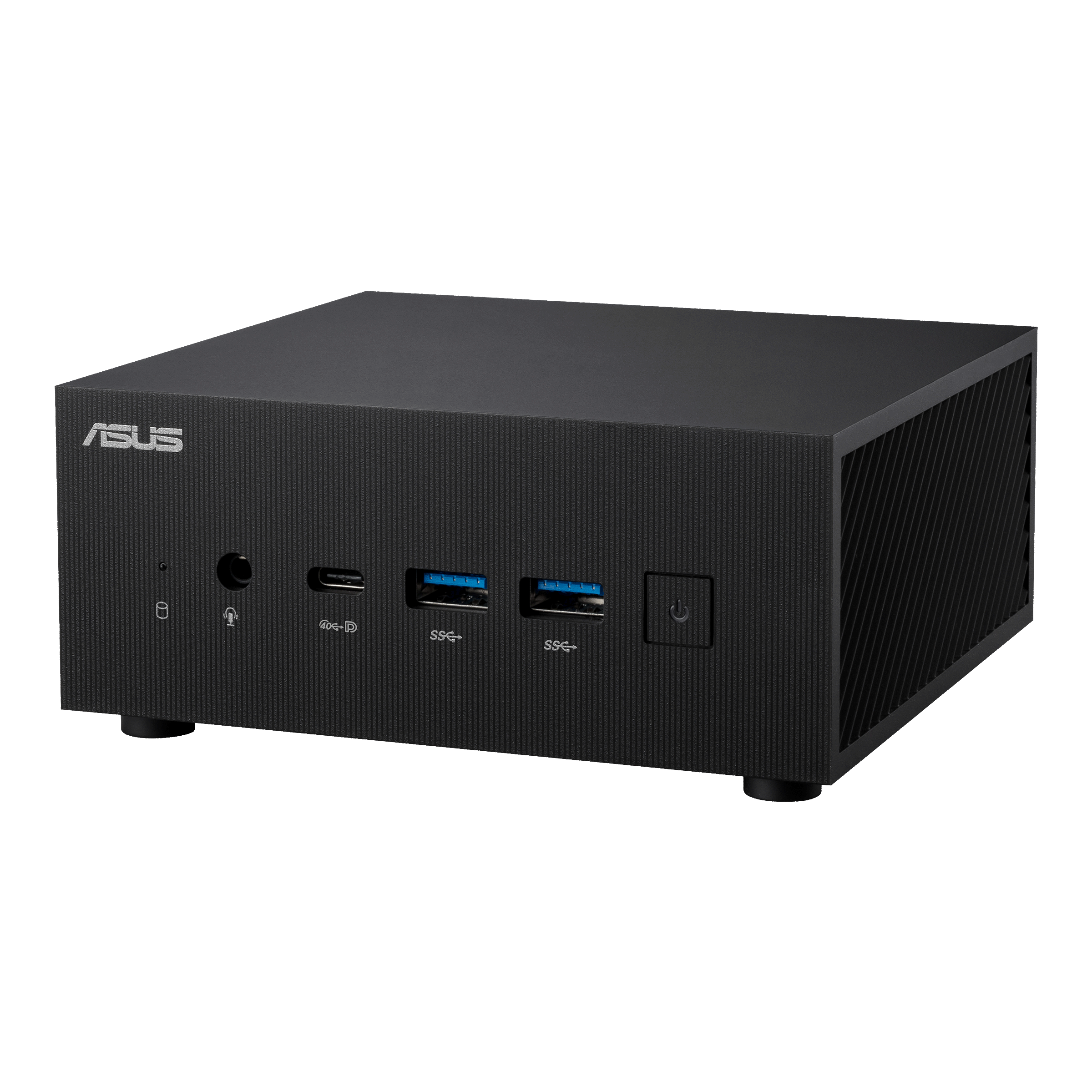
This ASUS mini PC is aimed at reliable daily work where a quiet box behind a monitor or on a counter keeps running without complai

64GBZen 4 value tier
Check live price on Amazon ↗

This configuration currently lists through the ASUS ExpertCenter PN54-S1 (same ExpertCenter family). The page title and specs describe the PN53/PN55; compare configurations on the listing.

Full review →
Featured in

This machine is shortlisted in these situations: