beelink
Beelink SER8
This Beelink mini PC is built to be unobtrusive in a living room, study, or small office where the machine should simply stay out
32GB8745 TOPSZen 4 value tier

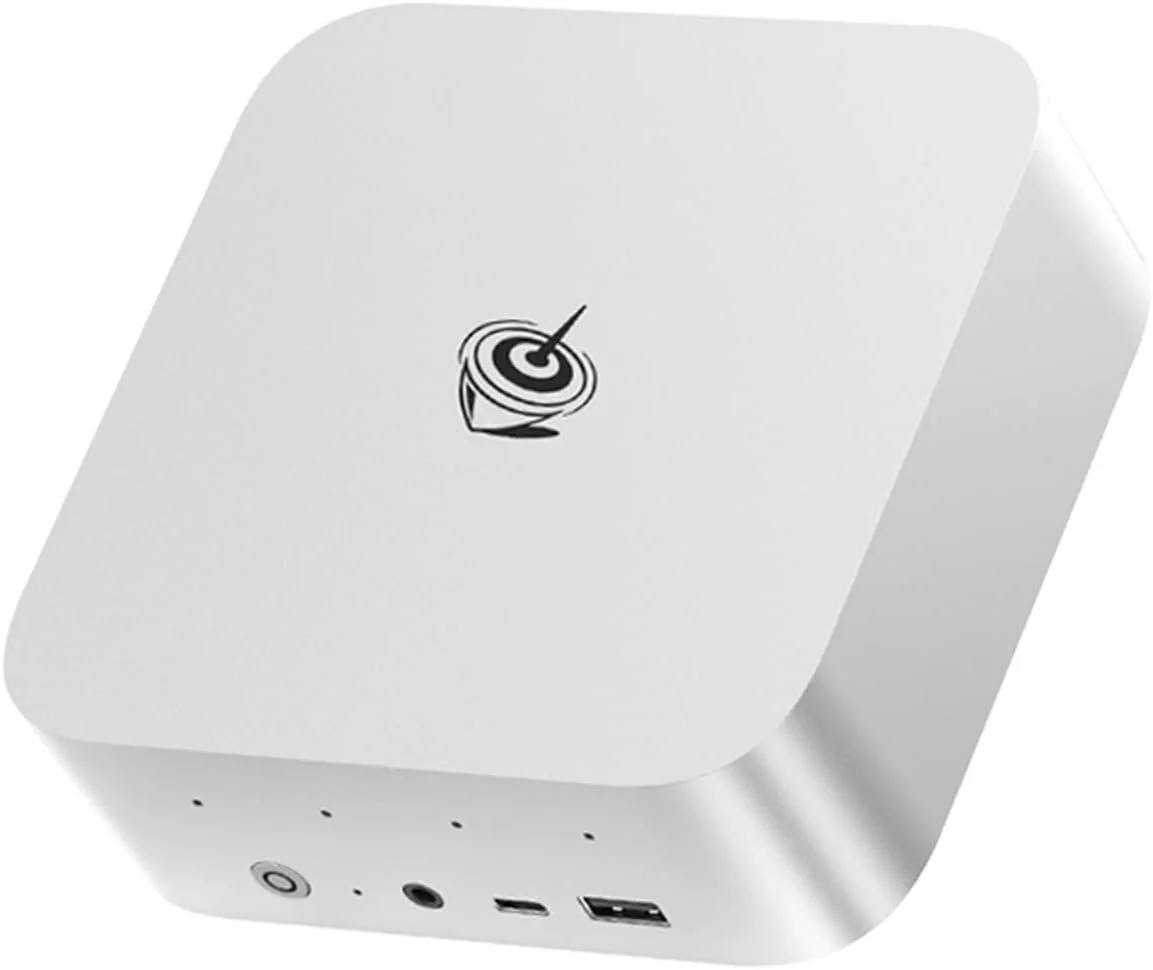
This Beelink micro desktop is designed around voice and conferencing rather than raw model speed, which makes it a different kind of AI-adjacent machine. A four-microphone array with a dedicated B1 AI chip provides 360-degree voice pickup, and built-in stereo speakers let it act as a meeting hub, dictation station, or front end for a voice assistant in a home office, reception area, or small studio. The core is the Ryzen 7 H255, an eight-core, sixteen-thread Zen 4 processor on a 4nm process boosting to 4.9GHz with 16MB of L3 cache, paired with the Radeon 780M graphics engine of 12 RDNA 3 compute units at 2.6GHz. That combination covers smooth 4K video timelines, comfortable 1080p gaming on moderate settings, and triple-display productivity through a USB4 port at 40 gigabits per second with power delivery and DisplayPort 1.4, plus DisplayPort 1.4 and HDMI 2.1 outputs that drive 4K at 240Hz. Memory is 24GB of Crucial LPDDR5X at 6400MT/s soldered on the board, a fixed figure that suits light local loads but will not expand, while storage provides a 1TB PCIe 4.0 x4 NVMe drive with a second M.2 slot taking total capacity to 8TB. Connectivity adds 2.5-gigabit Ethernet, Wi-Fi 6, Bluetooth 5.2, and dual 3.5mm audio jacks. The chassis measures about 5.31 by 5.31 by 1.76 inches in the 0.4-liter class, with MSC 2.0 vapor-chamber cooling and a silent fan rated near 32dB at 65W. For conferencing rooms, place the machine where the microphone array has a clear view of the table, and keep the second drive slot free for recordings so captures never fill the system volume. Since the H255 has no neural processor, buyers who mainly need local-model inference should look at the NPU-equipped SER9 Max instead, while this model rewards voice-first setups.
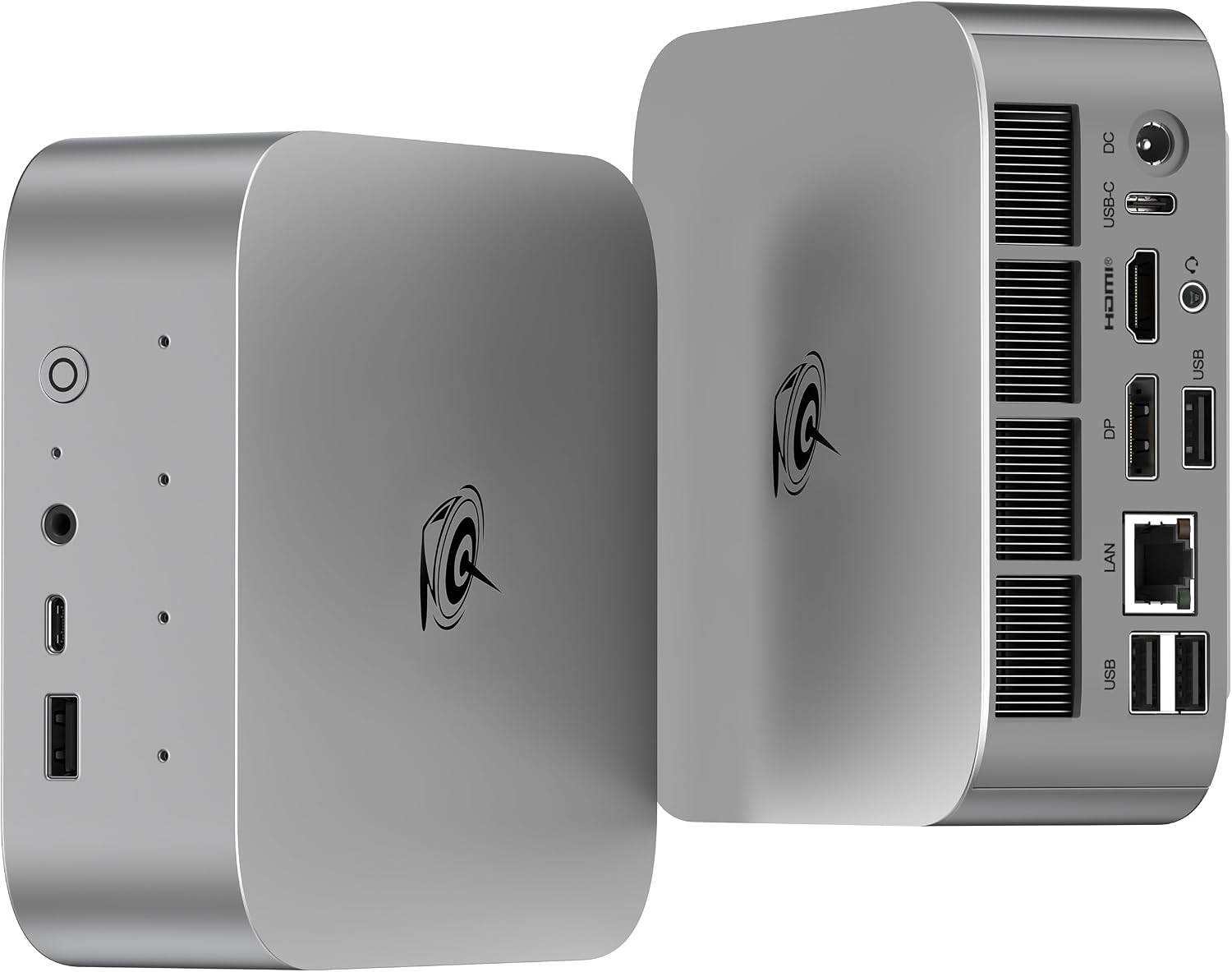
A compact AI PC for assistants plays a different role from a model-serving box: it sits on a desk, listens, and helps — and that is where the Beelink SER9 Pro earns its place. Its headline feature is a four-microphone array with a dedicated B1 AI chip for 360-degree voice pickup, paired with built-in stereo speakers, which turns the machine into a conferencing hub and a front end for voice assistants rather than a box that merely runs them. The core silicon is familiar and well proven: the Ryzen 7 H255, eight Zen 4 cores and sixteen threads up to 4.9GHz on a 4nm process, with the Radeon 780M GPU — the same class of integrated graphics as the SER8. That covers smooth 4K video timelines, comfortable 1080p gaming on moderate settings, and triple-display productivity across a USB4 port with 40Gbps, DisplayPort 1.4, and HDMI 2.1, all driving 4K at 240Hz. The 24GB of Crucial LPDDR5X at 6400MT/s is soldered, which is the honest trade for a sealed 0.4-liter chassis, and the 1TB PCIe 4.0 NVMe drive leaves a second M.2 free for up to 8TB in total. Choosing a compact AI PC for assistants means weighing voice hardware against inference speed, and this machine is explicit about its side of that trade. The H255 has no NPU, so if what you need is a small desktop with NPU acceleration for model inference, the SER9 Max is the step up, and the HX 470 machines further along the line are the serious inference tools. Read this one as an affordable AI mini PC for voice and video work: assistant duty, conferencing, dictation, and transcription, plus all the ordinary productivity a fast eight-core chip handles without strain. The MSC 2.0 vapor-chamber cooler keeps it near 32dB at 65W, so it stays quiet through calls. For a home office, a reception desk, or a studio where a small, silent machine needs to anchor voice-driven workflows, the SER9 Pro is a compact AI PC for assistants that does its job without asking for much space or budget. Configuration moves the number within roughly a $680-820 band, and because stock and price shift week to week, it is worth confirming the current figure on the Amazon listing before you order.
This Beelink mini PC is built to be unobtrusive in a living room, study, or small office where the machine should simply stay out
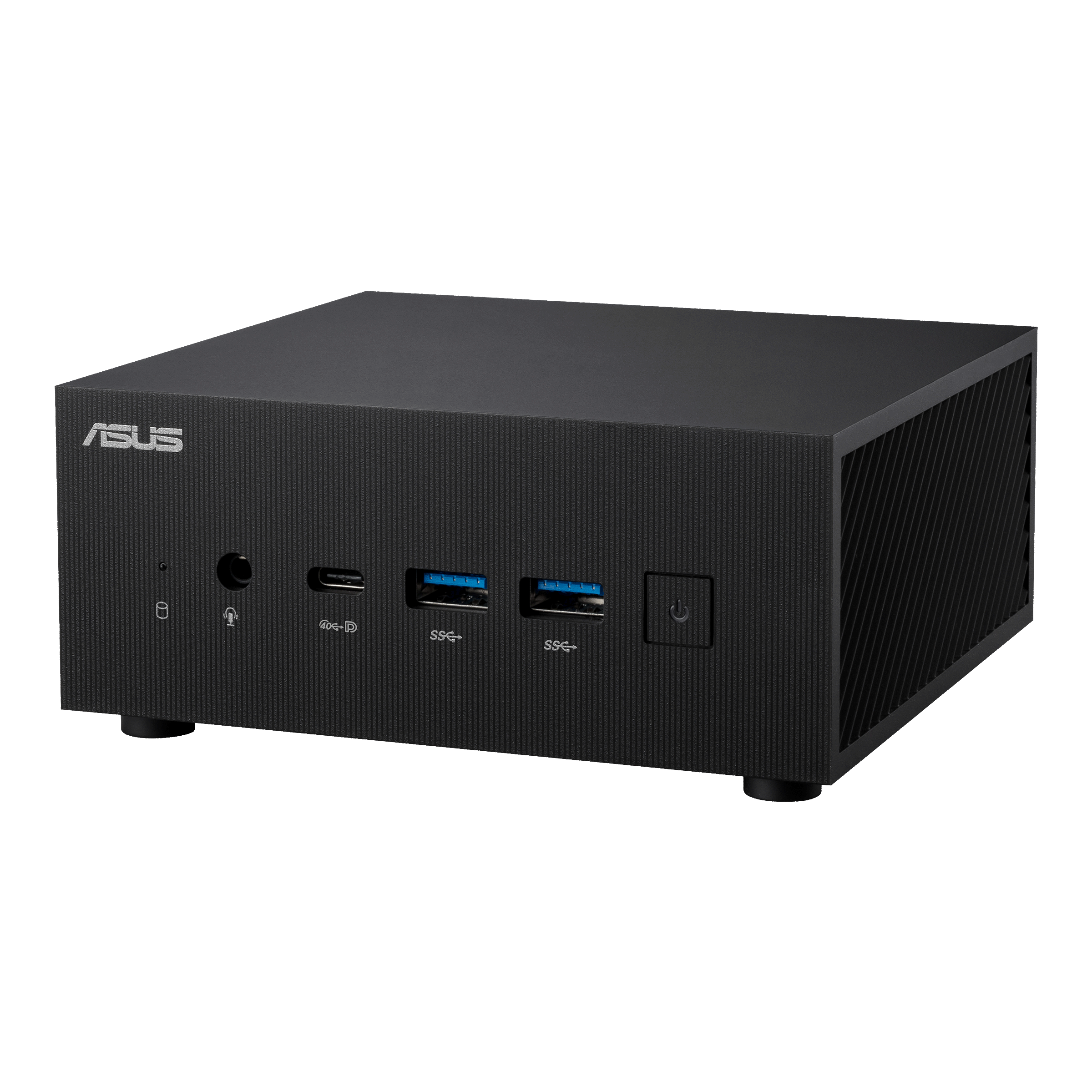
This ASUS mini PC is aimed at reliable daily work where a quiet box behind a monitor or on a counter keeps running without complai
This configuration currently lists through the ASUS ExpertCenter PN54-S1 (same ExpertCenter family). The page title and specs describe the PN53/PN55; compare configurations on the listing.
Full review →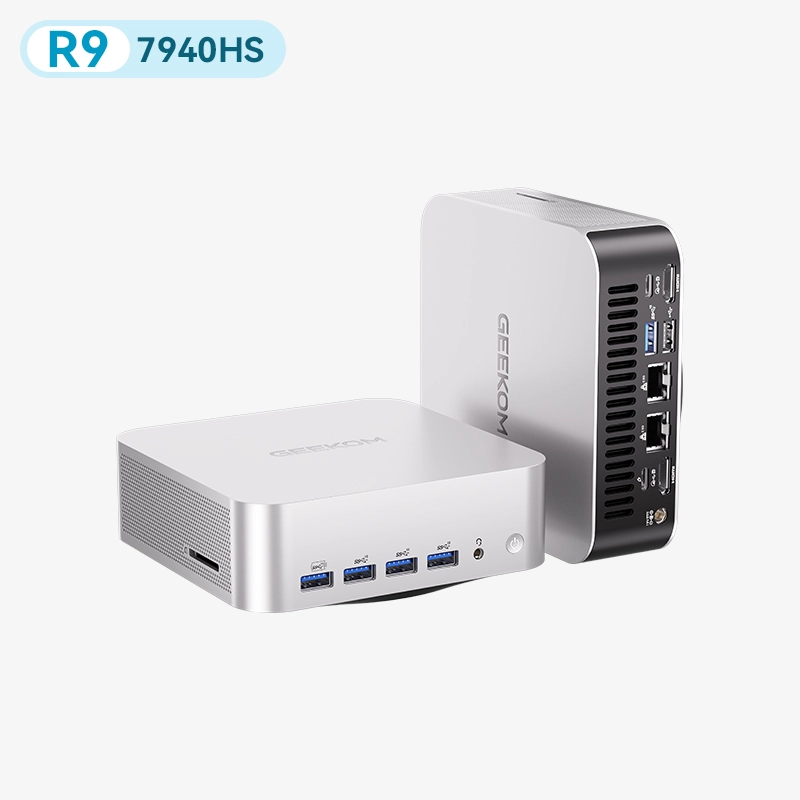
This GEEKOM desktop is aimed at creators who need a dependable workhorse for editing and design rather than a machine built only f
This machine is shortlisted in these situations: