gmktec
GMKTec EVO-X1 Pro
This GMKTec desktop is built to be set up once and left running, for people who want local AI available every day without ongoing
64GB86 TOPSHX 470

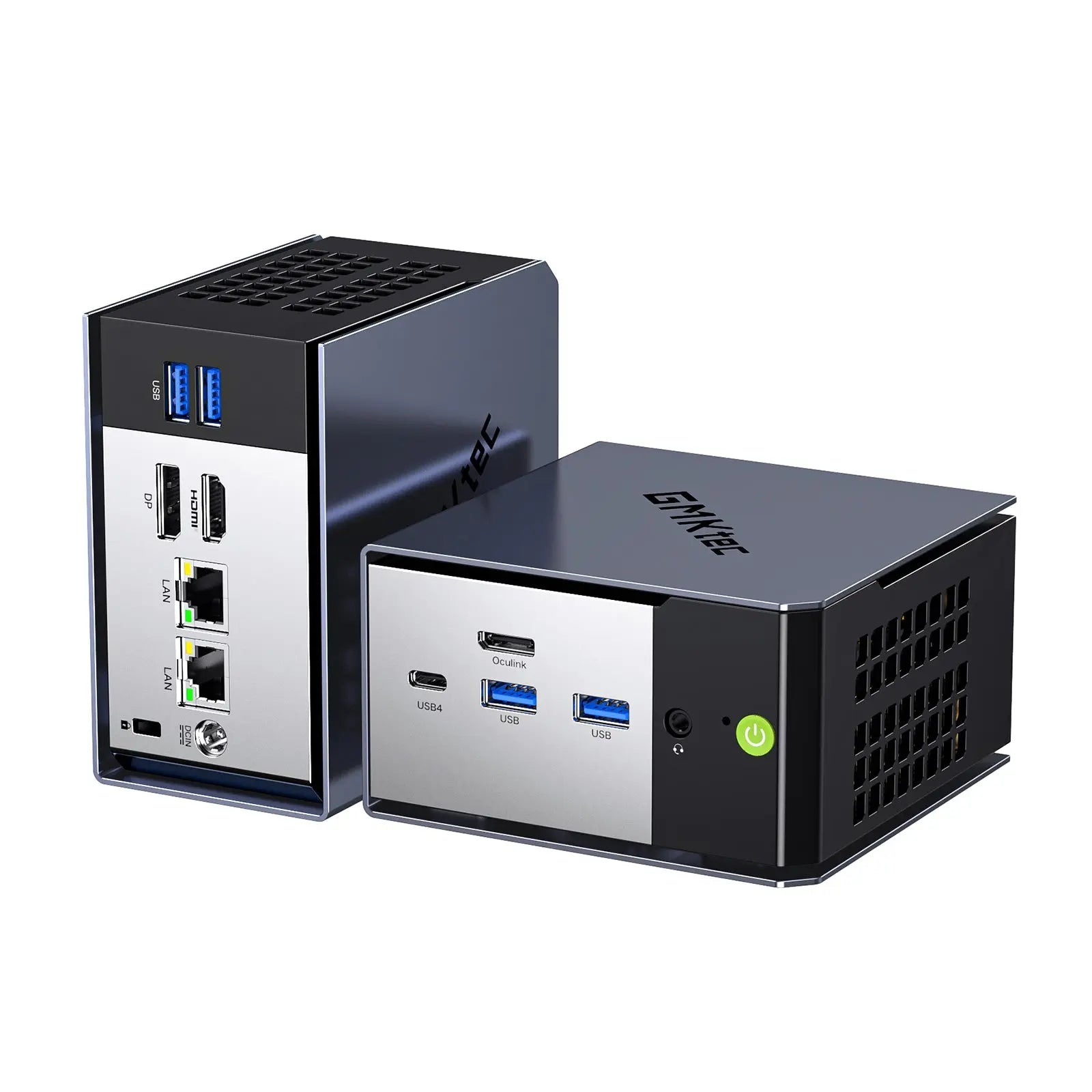
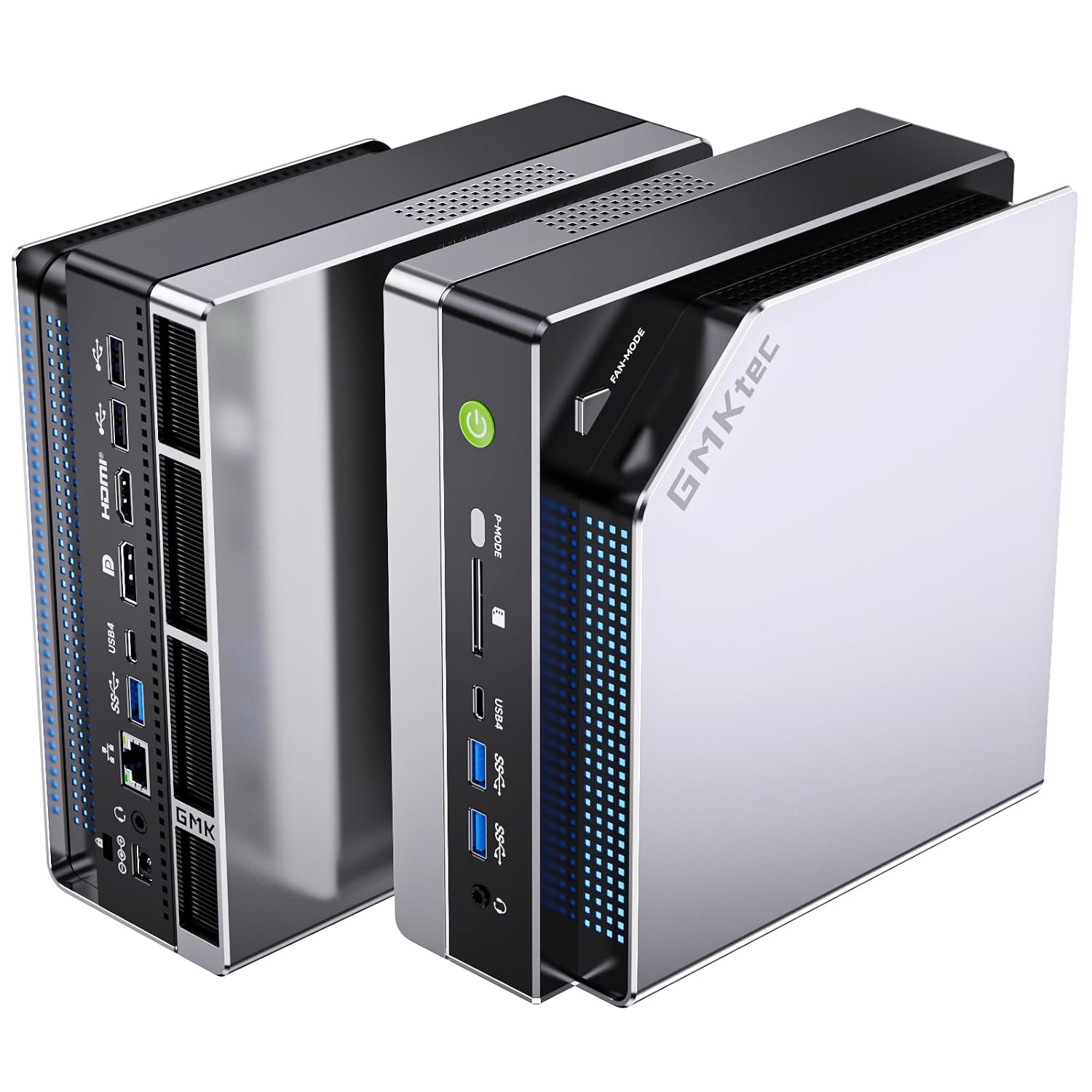
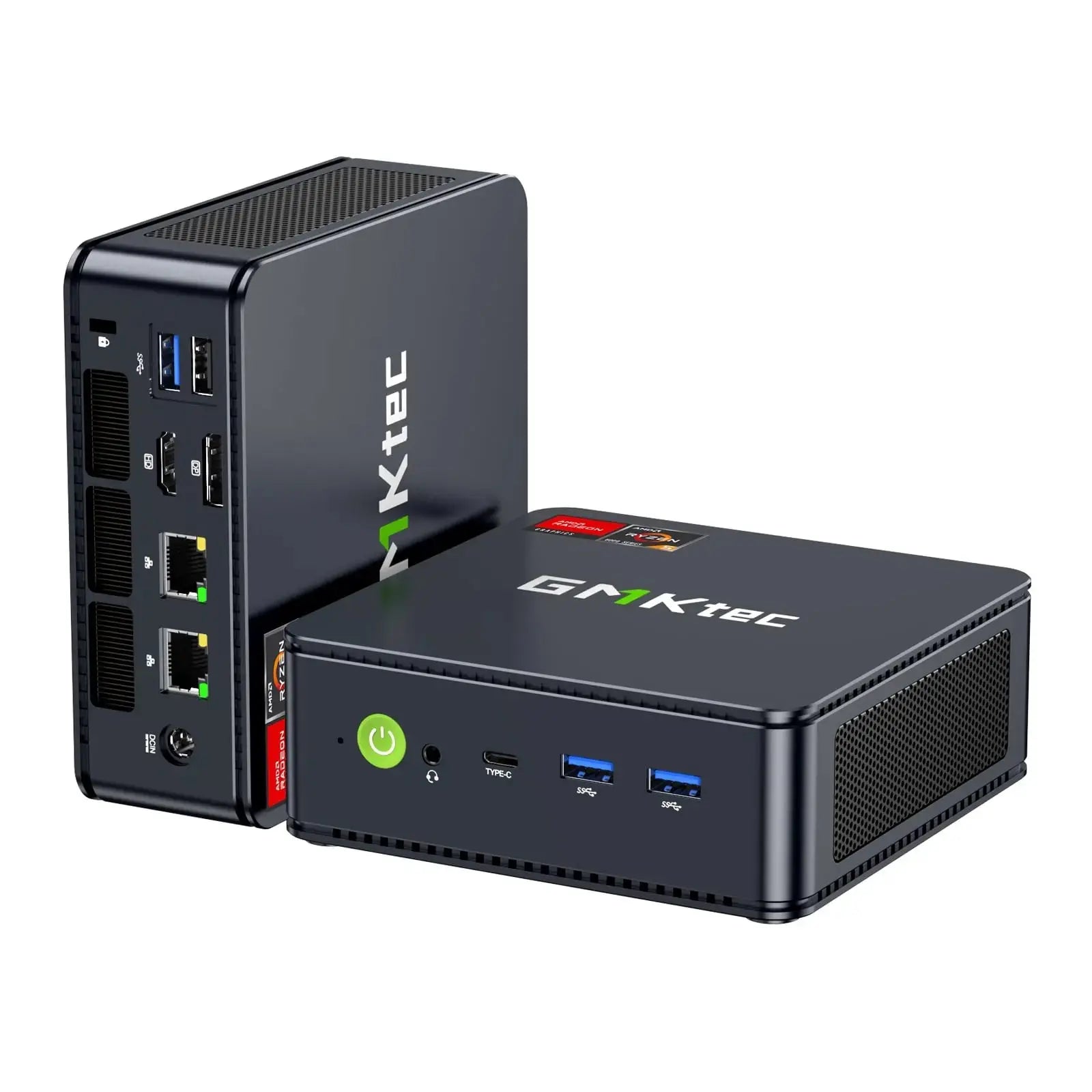
This GMKTec desktop is the value entry to the Strix Halo tier, keeping the flagship silicon and trimming only the memory. The Ryzen AI Max+ 395 provides sixteen Zen 5 cores and thirty-two threads to 5.1GHz with 64MB of L3 cache, the Radeon 8060S adds 40 RDNA 3.5 cores, and a 50-TOPS XDNA 2 neural processor brings combined output to 126 TOPS. The full 64GB of LPDDR5X-8000 is soldered on board and shared between CPU and graphics, with the whole pool assignable as graphics memory, so 14B and 27B models run at comfortable precision, 32B-class models fit at Q4 quantization, and image generation shares the same pool. As a unified-memory design there is no separate card and no VRAM cap short of the memory itself, which suits chat with long context, retrieval over local documents, batch OCR, transcription, and vision pipelines at a modest scale. Storage starts at 2TB on PCIe 4.0 NVMe with a second M.2 slot taking expansion to 8TB, and ports include dual USB4 at 40 gigabits per second, three USB 3.2 Gen2 ports, two USB 2.0 ports, HDMI 2.1 to 8K and 60Hz, DisplayPort 1.4, Wi-Fi 7, Bluetooth 5.4, and an SD 4.0 reader on a single 2.5-gigabit Ethernet port. A triple-heat-pipe stack with two CPU fans and a dedicated fan for memory and storage keeps the sealed chassis near 18.6 by 19.2 by 7.7cm steady under sustained load, with an external 330W supply. Keep model files on the larger drive so downloads never crowd the working system volume. The memory is a fixed ceiling, the 96GB figure belongs to the 128GB sibling, and buyers planning for 70B-class weights should choose that larger tier instead, since 64GB is the ceiling.
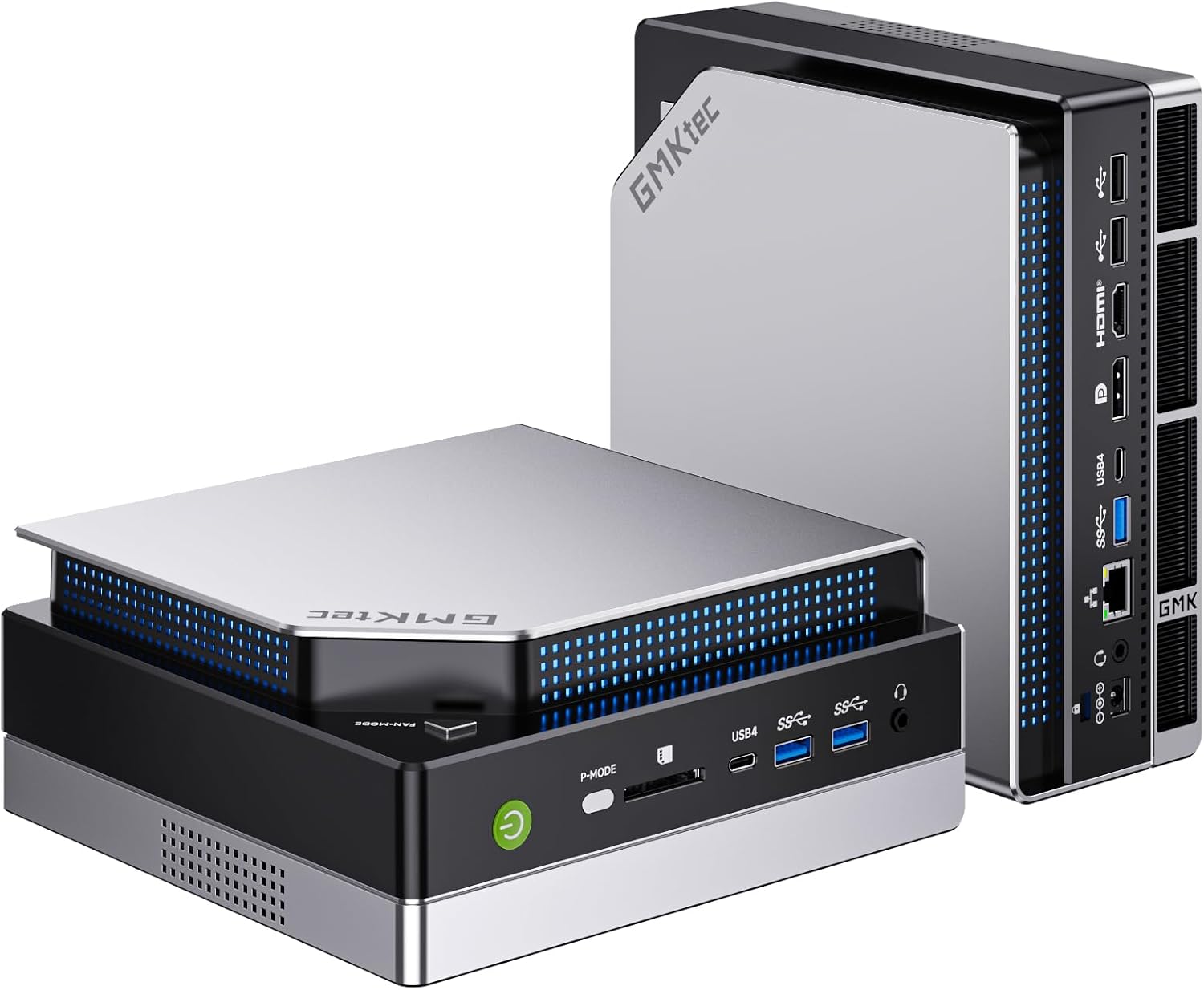
The GMKtec EVO-X2 at 64GB is the value entry to AMD's Strix Halo tier — a mini PC for running local AI at 64GB that keeps the flagship silicon and trims only the memory. Under the hood it is the same Ryzen AI Max+ 395 as the 128GB configuration: sixteen Zen 5 cores and thirty-two threads up to 5.1GHz with 64MB of L3 cache, the Radeon 8060S with 40 RDNA 3.5 cores, and a 50-TOPS XDNA 2 NPU — 126 platform TOPS, identical headline numbers. What the 64GB tier changes is how far up the model scale you go. The full 64GB of LPDDR5X-8000 is shared between the CPU and GPU, and the whole pool can be handed to the graphics engine as VRAM using AMD's software tools. That removes the wall most mini PCs hit: 14B-to-27B models run at full precision comfortably, 32B-class models fit at Q4 quantization, and on-device image generation shares the same pool. It is a unified memory mini PC in the truest sense — one pool, no separate card, no VRAM cap short of the memory itself. If your workload stops at 32B, the difference between this and the 128GB tier is money you do not need to spend. The hardware around the memory is unchanged from the flagship. A 2TB PCIe 4.0 NVMe drive comes installed, with a second M.2 slot available for growth to 8TB. Ports include dual USB4 at 40Gbps, three USB 3.2 Gen2, two USB 2.0, HDMI 2.1 to 8K/60, DisplayPort 1.4, Wi-Fi 7, Bluetooth 5.4, and an SD 4.0 reader. For a mini PC for running local AI at 64GB, that is a lot of machine around the memory: a single 2.5GbE port, a cooling stack built from three heat pipes with two CPU fans and a dedicated fan for the DDR and SSD, and a sealed chassis measuring roughly 18.6 x 19.2 x 7.7cm with an external power supply. Two honest notes. The 64GB is soldered — a fixed ceiling, and the entire pool is the maximum usable VRAM on this unit; the 96GB figure you may see quoted for this family belongs to the 128GB configuration. And if 70B-class weights are on your roadmap, plan for the 128GB tier instead; 64GB is the right size for the 14B-to-32B range and no larger. For buyers who want a mini PC for running local AI at 64GB without paying for capacity they will not use, this is the value Strix Halo build to consider, typically in the $2,300–2,500 range, keeping the live listing the source of truth. Look at current availability on Amazon.
This GMKTec desktop is built to be set up once and left running, for people who want local AI available every day without ongoing
This GMKTec desktop is the compact end of the Strix Halo class, for people who want the largest models that will fit in a desk-siz
This GMKTec desktop is the lowest-cost way to test whether local AI earns a place in daily work, and it is honest about that ceili
This machine is shortlisted in these situations: